
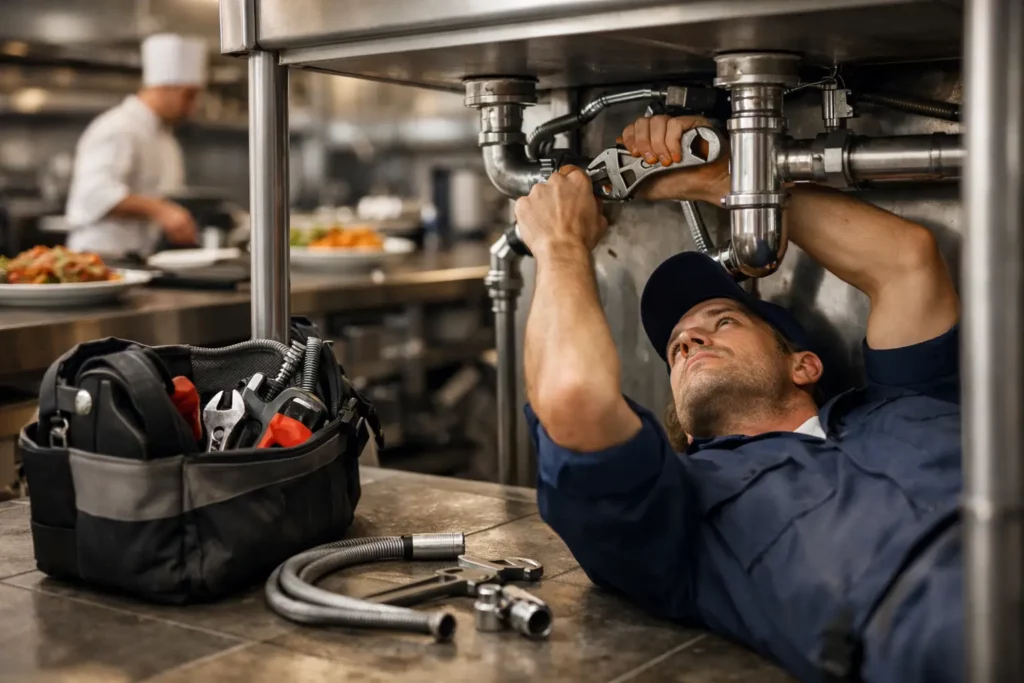
A backed-up floor drain during lunch rush is not a small plumbing issue. It can slow the kitchen, create a sanitation problem, frustrate staff, and put revenue on hold fast. That is why restaurant plumbing maintenance services are less about routine checkups and more about protecting daily operations.
Restaurants put far more stress on plumbing systems than most commercial spaces. Grease, food scraps, constant handwashing, heavy dishwasher use, busy restrooms, and long operating hours all add up. A system that seems fine one week can turn into an emergency the next if small warning signs are ignored.
Why restaurant plumbing maintenance services matter
In a restaurant, plumbing is tied to almost every part of service. Prep sinks, mop sinks, hand sinks, dishwashing stations, ice machines, grease interceptors, water heaters, and customer restrooms all need to work properly every day. When one piece fails, the problem usually spreads beyond that fixture.
A clogged line in the kitchen can slow cleanup and food prep. A leaking faucet or running toilet can raise water bills without anyone noticing right away. A failing water heater can affect dish sanitation, staff workflow, and customer comfort at the same time. Preventive service helps catch these issues early, when repairs are usually simpler and less disruptive.
There is also a cost difference that owners and managers feel quickly. Planned maintenance is easier to schedule, easier to budget for, and usually easier on the business than after-hours emergency work. Emergency calls still matter when something breaks unexpectedly, but depending on them as the main plumbing strategy gets expensive.
The plumbing issues restaurants deal with most
Restaurants have patterns. Certain plumbing problems show up again and again because the environment is tough on pipes, drains, and fixtures.
Drain blockages are one of the biggest examples. Kitchen drains collect grease, soap, food debris, and sediment over time. Even with good staff habits, buildup happens. The question is usually not whether a line will need service, but how long it will be allowed to build before it creates a backup.
Grease-related issues are especially common. Grease traps and interceptors need regular attention, and nearby piping often needs inspection as well. If maintenance is skipped, grease can harden, restrict flow, and cause repeated drainage problems that seem to come out of nowhere.
Water heaters also take a beating in food service settings. Restaurants rely on a steady supply of hot water, and equipment that is undersized, aging, or poorly maintained tends to show it through inconsistent temperatures, slow recovery, or full failure at the worst possible time.
Restroom plumbing is another area that gets overlooked until customers notice. Constant use means toilets, flush valves, faucets, and drains wear down faster than in many other businesses. Small leaks and weak flushing performance may not seem urgent, but they often point to parts that are close to failing.
What a practical maintenance plan should include
Good restaurant plumbing maintenance services are not just a quick glance under the sink. They should focus on the parts of the system that see heavy daily use and the areas most likely to interrupt operations.
Drain inspection and cleaning should be a core part of the plan. For some restaurants, that may mean periodic snaking or jetting based on volume and the type of food being prepared. A coffee shop and a full-service restaurant do not create the same drain load, so the schedule should reflect real usage.
Grease trap and interceptor performance should be monitored consistently. If grease control is only addressed after odors, slow drainage, or backups appear, the maintenance schedule is already behind. This is one of those areas where prevention usually saves a lot of trouble.
Fixtures and supply lines should be checked for leaks, corrosion, loose fittings, and worn components. Many commercial leaks start small enough to be ignored, especially in utility areas, but even a minor leak can damage cabinets, flooring, wall materials, or surrounding equipment over time.
Water heater inspection matters too. A maintenance visit should look at heating performance, venting where applicable, pressure relief components, visible wear, and signs of sediment issues. Hot water problems often build gradually before they become obvious to staff.
Restroom plumbing should not be left out of the plan. Toilets that run, sinks that drain slowly, and faucets with poor flow create a bad customer impression and increase utility costs. For many restaurants, front-of-house plumbing affects reputation almost as much as kitchen performance.
Restaurant plumbing maintenance services should match the building
No two restaurants need the exact same maintenance schedule. That depends on kitchen volume, the age of the building, fixture count, equipment type, and whether the property has a history of recurring plumbing issues.
An older building may need more frequent inspections because aging drain lines, outdated shutoffs, or previous repair work can create weak points. A newer restaurant may have fewer immediate concerns, but heavy use can still wear components out faster than expected.
The menu matters too. A business doing high-volume frying, heavy dishwashing, or large-scale food prep will place more strain on drainage and grease systems than a lighter-use operation. There is no benefit in using a generic maintenance interval if the system’s actual demand is much higher.
That is why the best approach is straightforward: inspect, identify the likely trouble spots, and build a service plan around them. Some restaurants need monthly attention in key areas. Others may be fine on a quarterly schedule with targeted cleanings and annual equipment checks.
What happens when maintenance gets delayed
Skipping maintenance usually feels cheaper at first. Then the system starts charging interest.
The first signs are often easy to overlook. A sink drains a little slower. A restroom toilet needs a second flush. Staff notice an odor near a floor drain. The dishwasher area seems to stay wetter than usual. None of these issues necessarily shut the restaurant down on day one, which is exactly why they tend to linger.
But plumbing problems rarely stay in their lane. A partial blockage becomes a backup. A small supply leak turns into water damage. A neglected water heater loses efficiency and then fails during peak demand. At that point, the repair itself is only part of the cost. Lost service time, staff disruption, cleanup, and customer impact can cost more than the plumbing work.
For restaurant owners and property managers, that trade-off matters. Preventive maintenance is not about over-servicing a system. It is about reducing the chances of business interruption and extending the life of expensive equipment and infrastructure.
Choosing a plumber for restaurant maintenance
Restaurants need more than a contractor who can fix a leak. They need a plumbing team that understands urgency, scheduling, and the reality of working around business operations.
That means showing up on time, diagnosing problems efficiently, and doing clean, professional work in active commercial spaces. It also means recognizing when a short-term repair is enough and when a recurring problem points to a bigger issue that should be addressed before it becomes an emergency.
A good maintenance partner should be practical, not dramatic. Some issues need immediate action. Others can be planned and staged to minimize disruption. Knowing the difference helps owners make better decisions and avoid overspending in the wrong areas.
For restaurants in busy service areas like Chilliwack, Abbotsford, Mission, and Langley, response time and consistency matter just as much as technical skill. If plumbing service is hard to schedule or unreliable when problems come up, the maintenance plan loses much of its value.
A smarter way to protect daily operations
Restaurant plumbing works best when it stays in the background. Customers do not think about drains, water lines, or hot water capacity when everything is running properly, and that is exactly the point.
Professional restaurant plumbing maintenance services help keep kitchens moving, restrooms functional, and repair costs more predictable. They also give owners and managers a clearer picture of what their plumbing system needs now versus what can wait. That kind of planning is good for operations, good for budgets, and good for peace of mind.
If your restaurant has recurring clogs, inconsistent hot water, slow drains, or small leaks that keep returning, those are not minor inconveniences. They are signals. Addressing them early is often the difference between a scheduled service call and a problem that interrupts the whole day.
The right maintenance plan is not flashy. It is reliable, consistent, and built around keeping your doors open without plumbing getting in the way.