
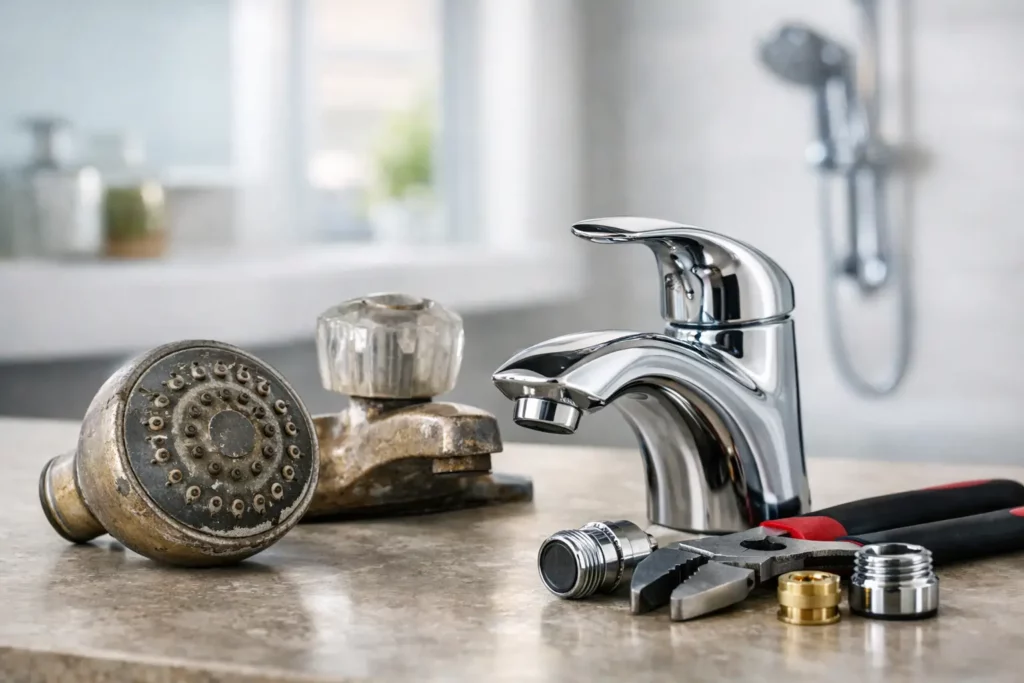
A dripping faucet that keeps coming back, a toilet that needs a handle jiggle, or a shower valve that never quite gets the temperature right usually means the same thing: the fixture is aging out. Homeowners often ask how often replace plumbing fixtures, but the honest answer is not one fixed number. Fixture lifespan depends on water quality, how heavily the fixture is used, the quality of the original installation, and whether small problems were handled early or left to get worse.
If you own a home, manage a rental, or maintain a commercial property, replacement timing matters because waiting too long can turn a simple fixture swap into cabinet damage, floor repairs, or a much bigger plumbing service call. The goal is not to replace everything on a schedule just because it is old. The goal is to replace fixtures before they start costing you more in leaks, wasted water, repeat repairs, and day-to-day frustration.
How often to replace plumbing fixtures
Most plumbing fixtures last longer than people think, but not forever. Faucets often perform well for 15 to 20 years, toilets can last 20 years or more, showerheads may need replacement closer to the 10-year mark if mineral buildup is heavy, and shutoff valves, supply lines, and drain assemblies often fail sooner than the fixture you actually see. In kitchens and bathrooms, the visible hardware may still look fine while the parts behind it are already wearing out.
That is why replacement decisions should be based on condition and performance, not just age. A well-made faucet in a lightly used guest bath may last far longer than a builder-grade fixture in a busy family kitchen. The same goes for commercial spaces, where higher daily use can shorten the timeline significantly.
What shortens fixture lifespan
Water quality is one of the biggest factors. Hard water leaves mineral deposits inside cartridges, aerators, showerheads, and valves. Over time, that buildup restricts flow, affects sealing surfaces, and makes handles harder to turn. Even a solid fixture will wear out faster if minerals are constantly collecting inside it.
Usage is another major factor. A powder room sink used a few times a week will not age like the kitchen faucet that runs all day. Toilets in busy households, tenant units, or small commercial spaces also wear faster because flappers, fill valves, handles, and internal seals cycle more often.
Installation quality matters too. Fixtures that were installed with poor alignment, low-grade connectors, or too much stress on supply lines often start leaking early. This is one reason professional installation pays off over time. The fixture itself may not be defective at all. It may simply have been set up in a way that shortened its service life.
Signs a fixture should be replaced, not repaired
Some repairs make perfect sense. Replacing a cartridge, tightening a loose handle, or swapping out a fill valve can add years to a fixture. But there is a point where repairs become repetitive and no longer save money.
If you are calling for the same faucet problem every year, replacement is usually the better move. The same is true when corrosion is visible around the base, when leaks return after part replacements, or when the finish is breaking down and the fixture is becoming harder to clean. On toilets, frequent running, weak flushing, cracks in the tank or bowl, and loose mounting that keeps coming back are all signs it may be time for a full replacement.
Another common issue is parts availability. Older fixtures can become expensive to maintain simply because matching parts are no longer easy to find. At that stage, replacement is often more practical than trying to keep outdated hardware alive.
Faucets
Kitchen and bathroom faucets usually give clear warning signs before they fail. Dripping, inconsistent water pressure, squealing when turned on, stiffness in the handle, and rust around connection points all point to wear. A minor drip is sometimes just a cartridge issue, but if the body is corroded or the fixture has already had multiple repairs, replacement is often the cleaner long-term fix.
For most homes, a quality faucet can last 15 to 20 years. In higher-use settings or homes with hard water, that number can be lower. If the faucet is still structurally sound and parts are available, repair may be worthwhile. If not, replacement usually saves money and hassle.
Toilets
A toilet can physically last for decades, but that does not mean it should. Older toilets often use more water than current models, and internal parts wear long before the porcelain does. If you are constantly dealing with phantom flushing, weak refill, clogs, or wobbling, it may not be worth continuing to patch it.
Cracks are the clearest replacement signal. Even hairline cracks can worsen and lead to water damage. Efficiency is another reason to upgrade. Replacing an outdated toilet can reduce water use and improve flushing performance at the same time.
Shower fixtures and tub valves
Showerheads are simple, but they take a beating from mineral deposits. If cleaning no longer restores flow, replacing the head is usually straightforward. The bigger issue is often the valve behind the wall. If temperature control is inconsistent, the handle sticks, or the trim leaks, the valve assembly may be wearing out.
This is one area where waiting can create more labor and cost later. A small leak behind a shower wall can go unnoticed until staining, soft drywall, or mold appears. If shower hardware is aging and symptoms are getting more frequent, it is smart to deal with it before wall access becomes part of the job.
Repair versus replacement comes down to cost and risk
There is no benefit in replacing a fixture that needs one inexpensive part and still has years left in it. But there is also no savings in repeatedly repairing something that is already near the end of its service life. The best decision usually comes down to three questions: Is the fixture structurally sound, are parts still available, and is the repair likely to hold?
If the answer to any of those is no, replacement is usually the safer choice. That is especially true when a failed fixture could damage surrounding finishes, cabinetry, flooring, or walls. A slow leak under a sink may not seem urgent until the cabinet bottom swells and the repair becomes much more than a plumbing issue.
When proactive replacement makes sense
Not every replacement needs to wait for a breakdown. If you are renovating a bathroom, updating a kitchen, or buying an older home, replacing aging fixtures proactively can prevent service calls later. It also gives you the chance to update shutoff valves, supply lines, and drain components at the same time, which is often where hidden failures start.
For landlords and property managers, proactive replacement can be especially cost-effective between tenants. It reduces emergency calls, protects finishes, and creates a more reliable unit overall. For homeowners, it means fewer surprises and better daily performance.
In service areas like Chilliwack and surrounding communities, we also see seasonal temperature shifts expose fixture weaknesses that went unnoticed during milder months. A fixture that is already loose, corroded, or leaking slightly tends to get worse when the rest of the plumbing system is under more stress.
A practical replacement timeline
If you want a simple planning benchmark, inspect faucets around the 10-year mark, watch toilets more closely after 15 to 20 years, and pay attention to shower performance well before visible failure. Supply lines and shutoff valves deserve routine attention too, because they often fail before the fixture itself. Age alone does not mean immediate replacement, but once a fixture is older and showing symptoms, delaying service rarely improves the outcome.
A dependable plumber will not tell you to replace everything. They will tell you what still has life left, what can be repaired properly, and what is likely to fail again. That is the standard we believe in at Armacom Plumbing because good plumbing service is not about selling more work. It is about getting the job done right and helping you avoid the next problem.
If a fixture in your home or building has started acting up more often, that is usually your signal to stop treating it like a one-time annoyance. Catch it early, weigh the repair honestly, and make the replacement before a small plumbing issue turns into damage you can see.