
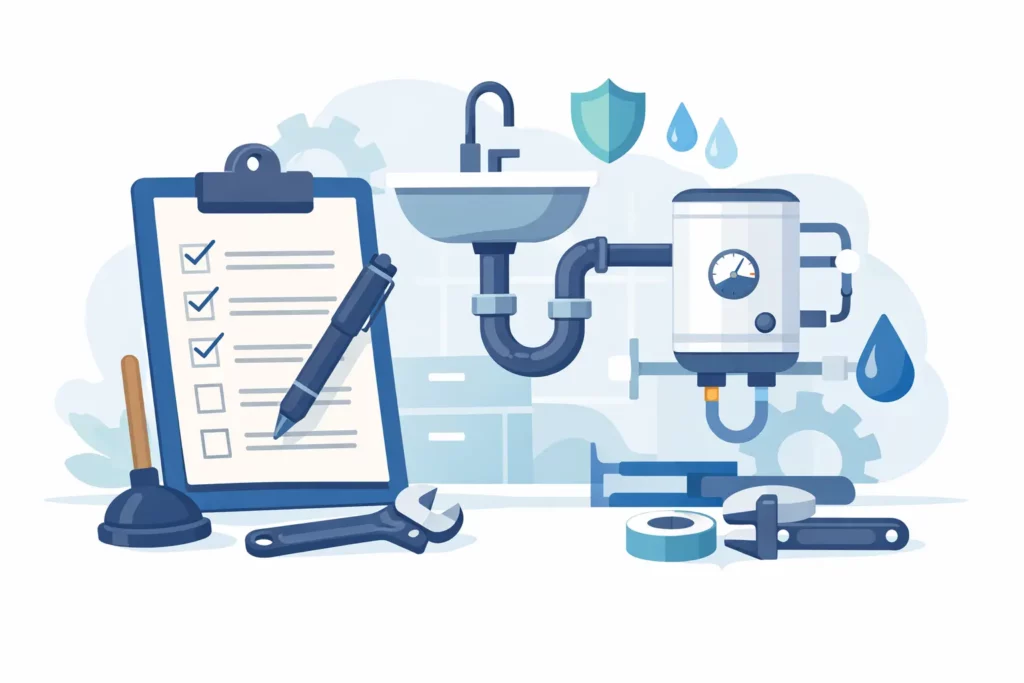
A small drip under a sink rarely stays small for long. What starts as a loose fitting or worn seal can turn into cabinet damage, mold, higher water bills, or an emergency call at the worst possible time. That is why a preventive plumbing maintenance checklist matters. It gives homeowners and property managers a practical way to spot issues early, protect fixtures and piping, and reduce the chance of expensive repairs.
For most properties, plumbing problems do not appear out of nowhere. They build gradually through wear, pressure changes, sediment, minor leaks, slow drains, and neglected shut-off valves. A good maintenance routine is less about doing complicated plumbing work yourself and more about knowing what to look for, what to test, and when to bring in a professional.
What a preventive plumbing maintenance checklist should cover
A useful checklist focuses on the parts of your plumbing system that fail most often or cause the most damage when ignored. That usually includes visible supply lines, drains, fixtures, toilets, water heaters, shut-off valves, and any plumbing exposed to seasonal temperature changes.
The goal is not to take apart every fixture in the building. It is to catch warning signs before they become disruptive. In a single-family home, that may mean checking bathroom fixtures, the kitchen sink, hose bibs, and the water heater. In a rental, strata, or small commercial property, the same logic applies, but the checklist should be done more consistently because heavier use puts more stress on the system.
Start with leaks and water pressure
Begin with the simplest inspection. Look under sinks, behind toilets, around tubs and showers, near appliance connections, and around the base of exposed pipes. You are looking for moisture, corrosion, mineral buildup, warped cabinetry, or staining on walls and floors. Even if there is no active drip, green or white residue around fittings often points to a slow leak.
Water pressure deserves attention too. If pressure suddenly drops in one fixture, the issue may be local, such as a clogged aerator. If it changes throughout the building, you may be dealing with a larger problem, including supply restrictions, failing valves, or hidden leaks. Pressure that is too high can also shorten the life of appliances, connectors, and shut-off valves. If faucets slam, pipes bang, or fixtures wear out faster than expected, pressure should be checked professionally.
Check toilets before they waste water quietly
Toilets are one of the most common sources of hidden water loss. A toilet can run silently for weeks and waste a surprising amount of water before anyone notices. Listen for refilling sounds after flushing. Watch for water movement in the bowl when the toilet has not been used. Check around the base for softness in flooring or signs of seepage.
The internal components inside the tank wear out over time, especially flappers, fill valves, and seals. These are not the most dramatic plumbing failures, but they are among the most common. Catching them early is simple and cost-effective.
Inspect drains without waiting for a backup
A slow drain is an early warning, not a minor annoyance. Sinks, tubs, showers, and floor drains should empty smoothly. If water pools, gurgles, or drains more slowly than usual, there may be buildup in the line. In kitchens, grease and food debris are frequent causes. In bathrooms, hair, soap residue, and product buildup are usually to blame.
This is one of those areas where maintenance has limits. Homeowners can remove hair from a stopper or clean a trap if they know what they are doing, but repeated clogs usually mean the problem extends farther into the line. Chemical drain cleaners may look like an easy fix, but repeated use can damage certain piping and still leave the real blockage in place.
Test shut-off valves while they still work
Many property owners do not think about shut-off valves until a fixture starts leaking. By then, the valve may be seized, brittle, or no longer sealing properly. Part of any preventive plumbing maintenance checklist should be testing fixture shut-offs under sinks, behind toilets, and near appliances, along with the main water shut-off for the property.
Turn the valve carefully to make sure it operates, then return it to its normal position. If it sticks, leaks, or feels like it may break, do not force it. That is a good time to have it replaced before an urgent repair depends on it.
Don’t ignore the water heater
Water heaters often get overlooked because they sit quietly until they fail. But when they do fail, the damage can be significant. Check the area around the tank for rust, moisture, or staining. Listen for popping or rumbling sounds, which can point to sediment buildup. Confirm that the unit is heating consistently and not taking longer than usual to recover.
For tank-style units, periodic flushing may help reduce sediment, though the right schedule depends on water quality, the age of the heater, and whether it has been maintained before. On older units, aggressive flushing can sometimes reveal existing weakness rather than solve it. That is why water heater maintenance is one of those jobs where a professional assessment can save you from making a marginal unit worse.
If the pressure relief valve, venting, gas connection, or combustion performance is in question, that should not be treated as a DIY issue.
Seasonal checks matter more than people think
In the Fraser Valley and surrounding communities, seasonal changes can put real stress on plumbing systems. Outdoor faucets, irrigation lines, exposed piping, and crawl space plumbing should be checked before cold weather and again when temperatures rise.
Before winter, disconnect hoses and make sure exterior hose bibs are protected if needed. Insulate vulnerable pipes in garages, crawl spaces, or exterior walls. If a property has had freezing issues before, that history matters. The best prevention is usually targeted to the weak points already known.
In warmer months, pay attention to increased outdoor water use. Leaks in hose connections, yard lines, or pool-related piping can go unnoticed because they happen outside and may not leave obvious indoor signs. Properties with specialty outdoor features or pool systems should have those lines inspected as part of a broader maintenance plan.
Kitchens and laundries need regular attention
High-use areas deserve more frequent checks. In the kitchen, inspect the faucet, sink drains, shut-offs, garbage disposal connection if applicable, and dishwasher supply and drain lines. Small drips under a busy sink can cause major cabinet damage before anyone notices.
Laundry areas are another common problem zone. Washing machine hoses should be checked for bulging, cracking, corrosion at the fittings, or signs of seepage. Supply hoses do not last forever, and when one bursts, the water damage can spread quickly. If the laundry area has a floor drain, make sure it is clear and functional.
When a checklist is enough, and when it isn’t
A checklist helps you catch visible problems and stay organized, but it does not replace professional plumbing service. Hidden leaks behind walls, underground line issues, drainage camera inspection needs, pressure irregularities, and water heater safety concerns require proper tools and experience.
That is especially true for older homes, commercial spaces, multi-unit properties, and buildings with a history of recurring leaks or drain problems. If the same issue keeps coming back, the most affordable option is usually not another temporary fix. It is finding the source and correcting it properly.
For many homeowners and property managers, the best approach is a simple combination: do monthly or quarterly visual checks, keep an eye on changes in pressure or drainage, and schedule professional maintenance before a small issue becomes urgent. That is often the difference between a routine service call and a disruptive repair.
A practical preventive plumbing maintenance checklist for any property
A good routine should include checking for visible leaks, testing toilets for silent running, watching for slow drains, inspecting shut-off valves, reviewing water heater condition, checking appliance hoses, and preparing exposed plumbing for seasonal weather. If you manage multiple units or commercial spaces, document what was inspected and when. Patterns matter, and repeat problems usually leave clues.
Armacom Plumbing works with homeowners, property managers, and businesses that want plumbing systems to stay reliable, not just repaired after failure. Preventive maintenance is part of that mindset. When the system is checked with care and serviced on time, you avoid a lot of unnecessary disruption.
The smartest checklist is the one you will actually use. Keep it practical, repeat it consistently, and treat small warning signs like they matter, because in plumbing, they usually do.