
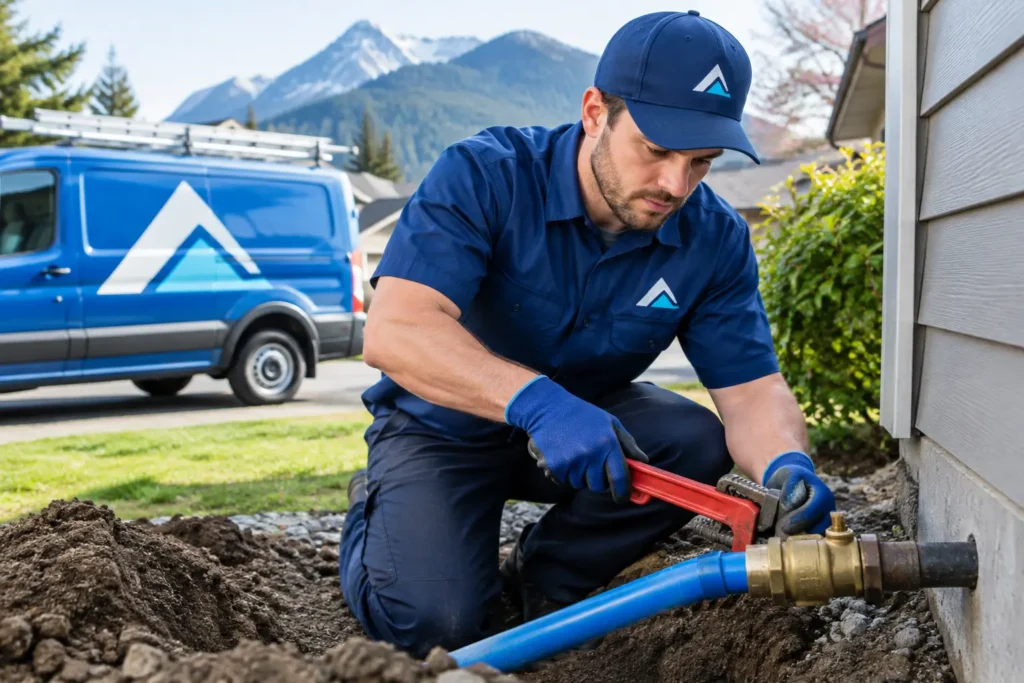
A wet patch spreading across the lawn, a sudden drop in water pressure, or water collecting near a foundation is not a problem to watch for a few days. Homeowners often ask who repairs water lines when the source of the leak is unclear. In most cases, the answer is a qualified plumbing contractor. The important detail is determining whether the damaged pipe is part of the private water service to the building or infrastructure managed by the local utility.
A water-line problem can waste a significant amount of water, damage landscaping or building materials, and create larger repair costs if it is left alone. For Chilliwack homeowners, landlords, and commercial property managers, a prompt assessment helps identify responsibility and get the right repair underway.
Who repairs water lines on private property?
A licensed plumber repairs water lines that serve a house, rental unit, mobile home, or commercial building on the customer-owned side of the system. This may include the underground water service pipe from the property connection to the building, pipes entering the foundation, and interior cold-water piping that has developed a leak.
The dividing point between public and private responsibility can vary by property and utility configuration. The water utility generally handles its own main lines and equipment, while the property owner is usually responsible for the line that supplies the building. A plumber can help locate the likely source of the trouble and explain whether the repair appears to fall on the private side before work begins.
Not every water issue means the underground service line has failed. Low pressure at one fixture can be caused by a local plumbing issue. Water around a hot water tank, under a sink, or behind a wall needs a different repair approach than a leak in the yard. Proper diagnosis matters because replacing a section of pipe that is not the source of the problem only adds cost and disruption.
Signs you may need water line repair
Underground water-line leaks are easy to miss at first. Unlike a drain leak inside a cabinet, the water may disappear into soil or travel away from the actual break. The first clue is often a water bill that increases without a change in household use.
Other warning signs include consistently low water pressure throughout the building, damp or unusually green areas of lawn, soft ground, water pooling near the foundation, or the sound of water moving when fixtures are off. In colder weather, a damaged or poorly protected line can also be affected by freezing conditions.
Inside the building, look for unexplained staining, warped flooring, damp drywall, a musty odor, or a water meter that continues to register use when no water is being used. These signs call for professional leak detection and plumbing repair rather than guesswork.
For a commercial property, unexplained water use deserves fast attention. A small continuous leak can affect operating costs, tenant spaces, inventory areas, or customer-facing portions of the building. Property managers should also treat water appearing near shared service areas as time-sensitive, particularly when it could spread to multiple units.
Water service line repair is not always the same job
The phrase “water line” covers several different pipes, and the repair method depends on where the failure is found. A leak at an exposed pipe connection may be a focused repair. A deteriorated buried water service may require replacement of a larger section or the full line. Older piping materials, repeated leaks in the same area, pipe movement, corrosion, and root intrusion can all influence the recommendation.
A plumber should assess the condition of the existing line, access to the affected area, pipe material, depth, and the likelihood of another failure nearby. The least expensive repair today is not always the best value if the remaining pipe is in poor condition. On the other hand, full replacement is not automatically necessary for every isolated break.
For homes with older Poly-B piping, the concern may be within the building rather than at the water service line. Poly-B replacement and whole-home repiping are broader projects intended to address aging supply piping throughout the property. A plumber can distinguish between a single localized leak and a system that is nearing the point where repeated repairs no longer make practical sense.
What a professional water-line visit should involve
A good service call starts with the evidence: where water is appearing, how long the issue has been present, whether pressure has changed, and whether the water meter suggests continuous use. The plumber then works through the likely causes and isolates the affected part of the plumbing system.
Once the source is identified, the repair scope should be clear. You should understand whether the work involves a connection, an interior pipe, a buried service line, or coordination with the utility. The contractor should also explain access requirements, possible restoration work around the repair area, and whether water will need to be temporarily shut off.
At Armacom Plumbing & Heating, the goal is to diagnose the actual failure before recommending a repair. Water damage and excavation are disruptive enough without adding unnecessary work to the job.
When a water line issue is an emergency
Some water-line problems cannot wait for a regular appointment. Call for emergency plumbing help if water is entering the building, flooding a mechanical room or crawlspace, running across floors, or collecting close to the foundation. A rapidly growing wet area outdoors, a major pressure loss, or water that cannot be controlled at an accessible shutoff also deserves urgent attention.
If it is safe to do so, turn off the building’s main water shutoff valve to limit damage while you arrange service. Avoid digging around a suspected buried line, opening walls, or attempting to clamp or patch piping yourself. Water can travel farther than expected, and an improvised repair can make access and diagnosis harder.
If water has reached finished areas, act quickly to protect flooring, drywall, furnishings, and stored materials. The priority is stopping the water source, then assessing the plumbing repair and any resulting damage.
Choosing the right plumber for water line work
Water-line repair calls for more than a quick patch. Ask whether the contractor regularly handles leak detection, water leak repair, water service repairs, and repiping work. Experience across these related services helps because the visible symptom is not always the actual failure.
For Chilliwack properties, local familiarity is useful as well. Older homes, mobile homes, rental properties, and light commercial buildings can have very different pipe layouts and access challenges. A plumber should be able to explain the findings in plain language and provide a repair recommendation that fits the condition of the system.
Price matters, but a vague low estimate is not the same as a defined scope of work. The cost can depend on the location of the leak, whether access requires opening finished surfaces or excavating, the pipe material, the length of line affected, and whether replacement is the more reliable choice. Clear communication upfront helps avoid surprises once the repair begins.
Preventing the next water-line problem
No plumbing system lasts forever, but early action can reduce the damage from a leak. Pay attention to pressure changes, unexplained water use, damp areas, and recurring repairs. If a property has aging supply pipes or a history of leaks, a planned evaluation is usually less stressful than waiting for a failure during a busy workday or after hours.
For landlords and property managers, keeping records of prior leaks and repairs can be particularly helpful. A pattern of failures may show that a targeted repair is no longer the long-term answer. For homeowners, knowing where the main water shutoff is located can make a major difference when water appears unexpectedly.
When you are unsure whether the issue is a utility problem or private plumbing, do not assume it will resolve on its own. A qualified plumber can identify the likely source, explain the next step, and help protect your property before a small water-line leak becomes a much larger repair.