
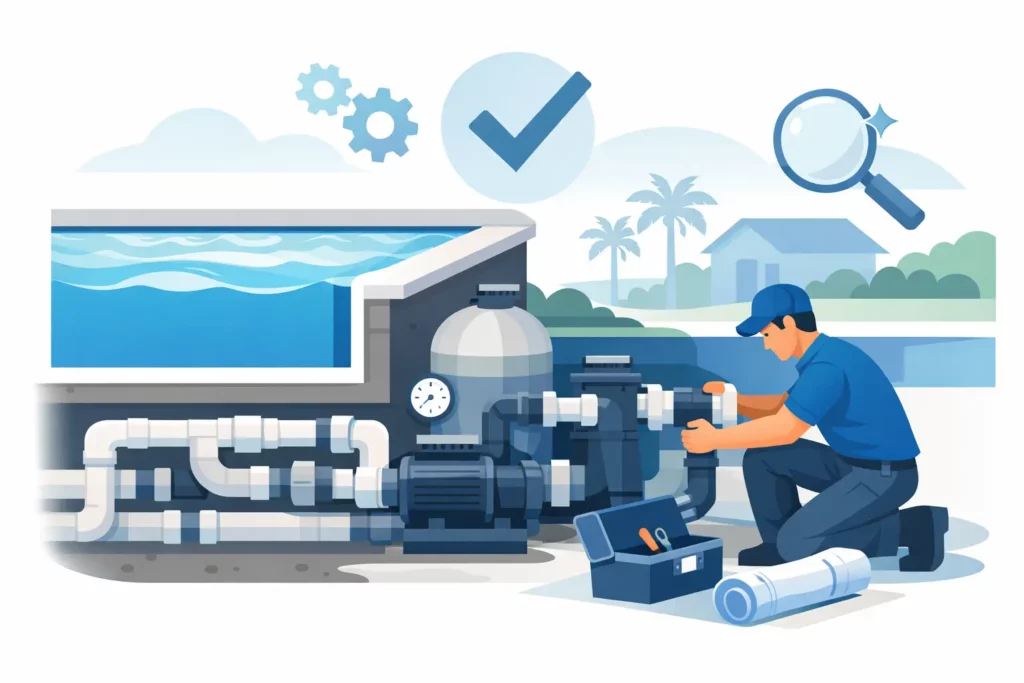
A pool can look finished on the surface and still have major problems hidden underground. That is why pool plumbing installation matters so much. The pipe layout, equipment placement, pressure balance, and connection quality all affect how well the system circulates, heats, drains, and holds up over time.
For homeowners, builders, and property managers, this is one of those stages where shortcuts usually show up later as weak water movement, noisy equipment, recurring leaks, or expensive repairs under decks and landscaping. Done properly, the plumbing supports clean water, efficient operation, and fewer service calls. Done poorly, it creates ongoing issues that are harder and more expensive to fix once the pool is complete.
Why pool plumbing installation matters early
Pool systems rely on steady circulation. Water has to move from the pool to the pump, through filtration and any heating or treatment equipment, and back into the pool at the right rate. If the plumbing design is undersized, poorly routed, or installed without enough attention to layout, every piece of equipment works harder than it should.
That affects more than performance. It can shorten the life of pumps and heaters, increase power use, and make the whole system less predictable. A pool with poor suction balance or return placement may also develop dead spots where water does not circulate well, which can lead to water quality problems and extra maintenance.
This is why plumbing should never be treated as a background task. It is one of the core systems that determines whether the pool will be efficient and dependable season after season.
What a well-planned pool plumbing installation includes
A proper installation starts with the full picture, not just a trench and some pipe. The plumbing plan should match the pool size, shape, equipment load, and site conditions. That includes suction lines, return lines, drains, skimmers, vacuum lines, water features, heaters, and automation where applicable.
Pipe sizing is one of the biggest factors. Bigger is not always better, but undersized pipe is a common reason for restricted flow and excess strain on equipment. The right size depends on the expected flow rate, total distance, number of fittings, and the equipment being used.
Equipment location also matters. A system with unnecessarily long runs, tight bends, or poor pad layout can lose efficiency fast. Clean routing helps water move with less resistance and makes future service easier. That matters if a valve needs replacement, a line needs testing, or equipment is upgraded later.
A good install also accounts for access. Pipes, unions, valves, and manifolds should be positioned so that repairs and maintenance can be handled without tearing apart the entire equipment area.
Common mistakes that cause trouble later
Many pool plumbing issues start with decisions that seem minor during construction. One example is using too many hard turns instead of planning smoother routing. Every bend adds resistance. Another is failing to separate lines clearly, which can make diagnostics harder if something goes wrong.
Improper joint preparation is another problem. If pipe connections are rushed or not set correctly, leaks may not show up right away. They can appear after backfilling, after temperature changes, or once the system runs under full pressure. At that point, repair work is much more disruptive.
Poor planning around elevation can also create issues. Equipment placement above or below water level changes how the system primes and drains. That does not mean one setup is always wrong, but it does mean the plumbing needs to be designed with those realities in mind.
There is also the issue of expansion. Some projects begin with a simple pool and later add a heater, water feature, spa tie-in, or upgraded filtration. If the original plumbing is too limited, later additions become far more complicated than they need to be.
Pool plumbing installation for new builds and retrofits
New construction gives the most flexibility. The plumbing can be designed around the site from day one, with clean trenching, proper equipment placement, and a layout built for both current use and future maintenance. This is usually the best time to think ahead about heating, automation, or specialty features.
Retrofit work requires a different approach. Existing concrete, landscaping, decking, or structures may limit access and pipe routes. In those cases, a good contractor needs to balance ideal design with what is practical on site. Sometimes that means working within tight space constraints. Other times it means replacing more of the plumbing system than originally expected because partial fixes would not provide lasting results.
This is where experience matters. A retrofit is not just about tying into old lines and hoping for the best. It requires checking the condition of existing piping, confirming compatibility with current equipment, and identifying weak points before new work begins.
How equipment choices affect plumbing design
The plumbing system and the equipment pad need to work together. A pump that is too aggressive for the line setup can create unnecessary wear and noise. A heater needs correct flow to operate efficiently. Salt systems, filters, and chlorination equipment all depend on proper sequencing and connection points.
Water features add another layer. Deck jets, waterfalls, bubblers, and similar upgrades often need dedicated lines and valves to work properly. Trying to tie them into a system that was not designed for them can reduce performance across the board.
The same goes for Modpool installations and other custom outdoor water setups. These projects are often more specialized than a standard backyard pool. They need careful planning for circulation, heating, drainage, and access, especially when the installation has to fit a specific property layout or construction schedule.
What property owners should ask before work starts
The right questions early can prevent a lot of frustration later. Ask how the lines will be routed, how the pipe sizing was chosen, and how the system will be pressure tested before completion. It is also worth asking how easy the equipment area will be to service once the project is done.
If the pool includes heating, water features, or future add-ons, those should be part of the discussion from the beginning. Even if every feature is not being installed right away, planning for them now can save major rework later.
You should also ask who is coordinating the plumbing with the rest of the project. On larger jobs, poor coordination between trades can create delays, conflicts in access, or equipment layouts that do not leave enough service room. The plumbing should fit the project, not be forced in at the end.
Why workmanship still makes the difference
Even with a good plan, execution is what determines the result. Clean cuts, solid joints, proper support, careful pressure testing, and a tidy equipment layout all reflect the quality of the work behind the scenes. These details are easy to overlook when the focus is on the finished pool, but they are often what separate a reliable system from one that develops recurring issues.
This is especially true in climates and properties where seasonal changes, soil movement, and long-term wear can stress buried lines and outdoor equipment. A careful installation helps the system stand up better over time.
For clients in Chilliwack and surrounding communities, working with a contractor who understands both general plumbing standards and pool-specific piping needs makes a real difference. Armacom Plumbing approaches these projects the same way it handles any critical plumbing work – with clear planning, dependable workmanship, and attention to long-term performance.
The value of getting it right the first time
Pool plumbing is not the part of the project most people see, but it is one of the parts they live with every day. When the system is installed properly, water moves the way it should, equipment runs more efficiently, and maintenance stays more predictable. When corners are cut, the pool may still fill and run, but problems usually catch up.
If you are planning a new pool, upgrading an existing setup, or adding specialized features, the plumbing deserves the same attention as the visible finish work. The best results usually come from careful design, clean installation, and a contractor who treats underground systems with the same precision as everything above grade.
A well-built pool should feel easy to own, and that starts long before the water goes in.