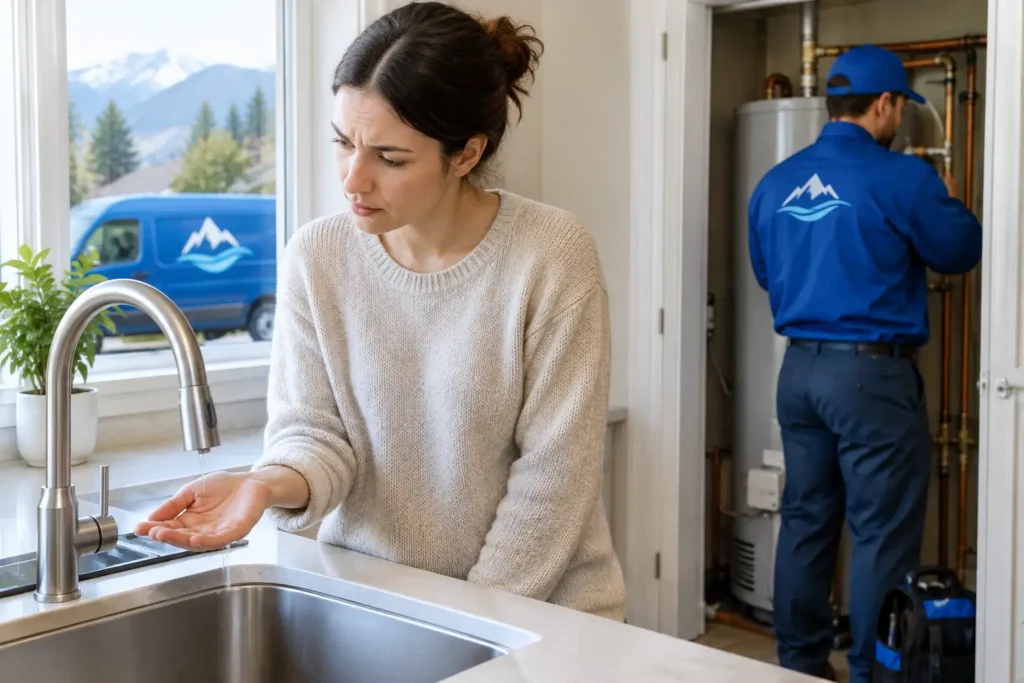
The shower turns cold halfway through, the kitchen sink never gets properly hot, or several tenants report lukewarm water at once. A hot water shortage is more than an inconvenience, especially in a busy household, rental property, restaurant, or commercial washroom. The cause may be as simple as demand exceeding the system’s capacity, but it can also point to a water heater problem that will worsen if it is left alone.
The useful question is not just, “Why is there less hot water?” It is whether the system is producing less hot water, losing it before it reaches the fixture, or being asked to do more than it was designed to handle. Those are different problems, and they require different repairs.
Start With the Pattern of the Shortage
A few details usually narrow down the diagnosis quickly. If hot water runs out only after two or three consecutive showers, the tank may simply be undersized for the household’s current demand. This is common after a family grows, a suite becomes occupied, or shower habits change. A tank can only store so much heated water before it needs recovery time.
If the hot water shortage is new and happens sooner than it used to, the equipment needs attention. Sediment buildup, a failed heating element in an electric unit, a burner or control issue in a gas unit, or a malfunctioning dip tube can all reduce available hot water. In Chilliwack, where households often rely heavily on consistent hot water through wet, cool months, a marginal water heater becomes noticeable quickly.
The location of the problem matters too. When every hot-water fixture is affected, the water heater or its supply is the likely starting point. When one shower or faucet is affected while the rest of the building has normal hot water, the issue may be localized to that fixture’s valve, cartridge, or piping.
Common Causes of a Hot Water Shortage
A water heater that is too small
Tank capacity should match the number of occupants, fixtures, and normal peak use. A household may manage well with its original tank for years, then suddenly outgrow it when another bathroom is used regularly or the property changes hands.
Choosing a larger tank is not automatically the best answer. A correctly sized tank needs to account for peak demand and recovery rate, as well as the available space and fuel source. Oversizing can add unnecessary upfront and operating cost. Undersizing creates the same frustrating cold-shower cycle every day.
Sediment reducing usable capacity
Mineral sediment settles at the bottom of tank-style water heaters over time. That buildup takes up space that should hold hot water and can interfere with heat transfer. The result is often less hot water, slower recovery, popping or rumbling sounds, and higher strain on the equipment.
In advanced cases, sediment can contribute to tank damage or premature failure. A plumber can assess the condition of the unit and advise whether servicing is reasonable or whether replacement is the more dependable long-term choice. Once a tank is heavily deteriorated, a temporary improvement is not the same as a lasting repair.
Failed components in electric or gas units
Electric water heaters commonly use two heating elements. If one fails, the unit may still produce some hot water, but the supply will be limited and recovery will be slow. This can make the problem seem intermittent because water may be warm after the tank has had a long time to recover.
Gas water heaters may develop issues with the burner, pilot or ignition components, gas controls, venting-related safety systems, or thermostat operation. These problems should be evaluated by a qualified professional. Gas equipment is not the place for trial-and-error repairs.
A damaged dip tube or internal tank issue
A dip tube directs incoming cold water toward the bottom of a storage tank. When it breaks or deteriorates, cold water can mix with the hot water near the outlet at the top of the tank. Homeowners often describe this as hot water that turns lukewarm far earlier than expected.
Internal tank corrosion can create similar symptoms, particularly in older units. If there is visible rust, water around the base of the tank, or moisture from a seam, plan for replacement promptly. A leaking tank cannot be reliably repaired.
Cross-connections and fixture problems
A failed mixing valve or certain single-handle faucet cartridge problems can allow cold water to cross into the hot-water line. This is less common than a water-heater failure, but it can create confusing symptoms, including lukewarm water at multiple fixtures.
A professional diagnosis is valuable here because replacing a water heater will not solve a cross-connection. The work starts with isolating whether the loss is occurring at the heater, in the distribution piping, or at an individual fixture.
When the Problem Is Demand, Not a Failure
Not every shortage means the system is broken. Tank water heaters have a recovery period. A long shower, followed by laundry, dishwasher use, and another shower can exceed the available stored volume. The unit may be operating normally but unable to meet the property’s peak load.
For homes with predictable high demand, a properly selected tankless water heater can be a strong option. Tankless units heat water as it is needed rather than drawing from a finite stored tank. However, they must be sized for the number of fixtures likely to run at the same time and the temperature rise required in local conditions. A unit that is too small will still leave users with reduced flow or inconsistent temperature during heavy demand.
Tankless water heaters are not always the right fit. A conventional tank can be an economical and effective solution for many homes, while commercial properties may need a more tailored approach based on fixture use and operating hours. The best choice comes from assessing actual demand rather than choosing equipment based only on advertised capacity.
Warning Signs That Should Not Wait
A lack of hot water can usually be scheduled during normal service hours, but some symptoms warrant a faster response. Call for professional help promptly if you notice water leaking from the tank or nearby piping, a gas smell, discolored hot water, unusual banging or rumbling from the heater, or water that becomes dangerously hot without adjustment.
Property managers should also act quickly when multiple units or washrooms lose hot water. Delays can affect tenants, business operations, sanitation, and the risk of further property damage. The goal is to identify the source before a manageable repair turns into an emergency plumbing issue.
What a Professional Water Heater Assessment Should Cover
A proper service visit is more than checking whether the water feels warm. The plumber should consider the equipment’s age and condition, tank capacity or tankless output, recovery performance, visible signs of leakage or corrosion, temperature behavior, and the property’s real hot-water demand.
For tank units, the condition of the tank itself is central to the recommendation. For tankless systems, flow demand, installation setup, and maintenance condition are equally important. The answer may be repair, replacement, or a capacity adjustment. It depends on the equipment, the symptoms, and whether the repair provides reasonable value compared with replacement.
For landlords and commercial property owners, documenting the pattern of complaints is helpful. Note which fixtures are affected, when the shortage occurs, and whether it follows a period of heavy use. That information can shorten diagnosis and help prevent repeated service calls for the same underlying issue.
Reliable Hot Water Starts With the Right Diagnosis
A hot water shortage rarely fixes itself. Sometimes the solution is a straightforward repair; other times, it is a sign that an aging tank or undersized system has reached its limit. The key is to avoid guessing, especially when leaks, gas equipment, or a multi-unit property are involved.
Armacom Plumbing & Heating can assess hot water problems for homeowners, landlords, and businesses in Chilliwack with a focus on clear recommendations and long-lasting results. Whether the answer is water heater repair, tank replacement, or properly sized tankless equipment, addressing the cause early helps keep a small disruption from becoming a larger plumbing problem.