
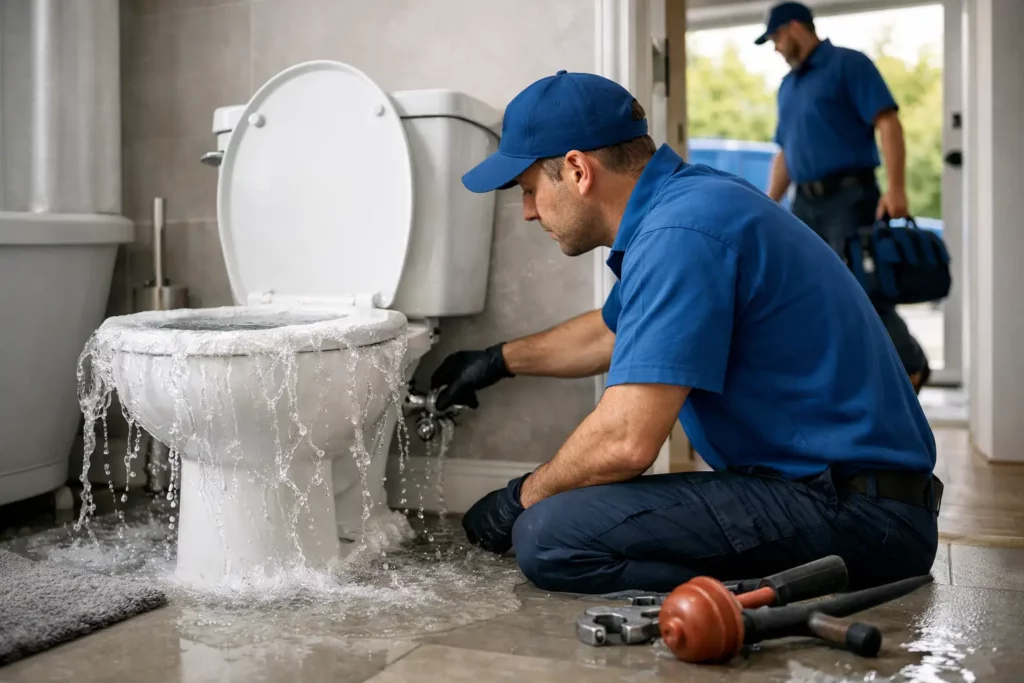
A toilet that keeps rising after you flush gives you very little time to think. If you are searching how to stop overflowing toilet water from reaching the floor, the first priority is not clearing the clog – it is stopping the water. A quick response can prevent damage to flooring, baseboards, cabinets, and ceilings below the bathroom.
Most toilet overflows are caused by a blockage in the toilet trap or drain line, but the right response depends on what is happening. A single toilet that overflows is often a localized clog. Multiple slow fixtures, gurgling drains, or sewage coming up through a tub can point to a larger drain or sewer line problem that needs professional attention.
How to Stop an Overflowing Toilet Immediately
Start by taking the toilet out of service. Do not flush again to “check” whether the clog has cleared. A second flush is one of the most common ways a manageable backup becomes a bathroom flood.
First, remove the tank lid carefully and set it somewhere safe. Inside the tank, locate the rubber flapper at the bottom. Push it closed if water is still running into the bowl. This stops the current flush cycle and may prevent the bowl from spilling over.
Next, turn off the toilet’s shutoff valve. It is normally located on the wall or floor behind the toilet, connected to the supply line. Turn the valve clockwise until it stops. Do not force an old or stiff valve, especially if it appears corroded. If it will not turn easily, hold the flapper closed and call for plumbing repair rather than risking a broken supply valve.
If the bowl is already near the rim, wait for the water level to drop before attempting any clearing method. Use towels around the base of the toilet to limit spreading water, but keep hands clear of wastewater. If sewage has reached flooring, treat it as contaminated water. Keep children and pets out of the area and avoid tracking it through the home.
Decide Whether It Is a Simple Toilet Clog
Once the water is off and the bowl has settled, look for signs that the blockage is limited to the toilet. A simple clog is more likely when the toilet was working normally before one flush, no other fixtures are draining slowly, and the bowl water level gradually returns to normal.
A proper toilet plunger can often clear this type of blockage. Use a flange plunger, which has an extended rubber sleeve designed to seal inside the toilet outlet. A flat cup plunger made for sinks will usually not create enough pressure.
Make sure there is enough water in the bowl to cover the plunger cup. Position the plunger over the drain opening, press down gently to establish a seal, then make controlled, firm strokes for 15 to 20 seconds. The first push should be gentle so you do not splash water out of the bowl. Lift the plunger at the end to break the seal and see whether the water drains.
If it drains normally, do not immediately do a full flush. Turn the supply valve back on, allow the tank to fill, then use a small bucket of water for a cautious test. If that drains properly, one normal flush should be safe.
When a Toilet Auger Is the Better Tool
If plunging does not work, a toilet auger may remove an obstruction farther inside the toilet trap. This tool has a protected cable that can reach through the curved porcelain passage without scratching the bowl when used properly. Feed the cable in slowly, rotate the handle, and retract it carefully.
An auger is useful for items that should never have been flushed, including wipes, hygiene products, small toys, or excessive paper. Do not use a coat hanger, metal rod, or improvised wire. Those can crack porcelain, damage the trapway, or push the blockage deeper into the drain.
Avoid chemical drain cleaners in a toilet. They are unreliable on solid clogs, can damage components, and create a serious splash hazard if a plumber later needs to clear the line mechanically. Hot water is also risky. Very hot or boiling water can crack a cold porcelain toilet bowl.
Signs the Problem Is Beyond the Toilet
A toilet clog and a drain line backup can look similar at first. The difference matters because repeated plunging will not clear a blockage farther down the system.
Call a plumber promptly if you notice the toilet bubbling when a sink, shower, washing machine, or dishwasher drains. Water backing up into a tub or shower when the toilet is flushed is another clear warning. So is more than one toilet draining poorly at the same time.
In Chilliwack homes, older drain systems, recurring root intrusion, damaged pipe sections, or buildup inside a main line can all contribute to recurring backups. A toilet may simply be the first fixture where the problem becomes visible. In that situation, the line may need professional drain cleaning, a camera inspection, or sewer line repair rather than another toilet plunger attempt.
For landlords and property managers, it is worth documenting which fixtures are affected and when the backup started. That information helps a plumber identify whether the issue is limited to one suite, one branch line, or a building drain. For restaurants and commercial properties, close the affected washroom until the cause is confirmed. Repeated flushing can spread wastewater quickly and create a larger cleanup issue.
When to Call for Emergency Plumbing
An overflowing toilet qualifies as an emergency when you cannot stop the water, wastewater has reached finished areas, or sewage is backing up through other drains. Shut off the toilet valve if possible, stop using water throughout the building, and arrange emergency plumbing service.
You should also call for help when the same toilet clogs repeatedly. A toilet that needs plunging every few days is not operating normally. The cause may be a partial blockage, an item lodged in the trap, a poorly functioning flush mechanism, or a developing drain problem farther down the line.
A professional diagnosis protects you from treating the same symptom over and over. At Armacom Plumbing & Heating, a plumber can assess the toilet itself, check nearby drainage behavior, and determine whether the repair calls for toilet service, drain cleaning, or further sewer line investigation.
Prevent the Next Overflow
The best prevention is simple: flush only toilet paper and human waste. Products marketed as flushable often do not break down like toilet paper, and they can collect in bends, older piping, or the main drain. Paper towels, facial tissues, wipes, cotton products, dental floss, and cooking grease do not belong in the toilet.
Use enough water for a full flush and avoid forcing large amounts of paper down at once. In homes with young children, keep the lid closed and consider a lid lock if toys have been flushed before. If the toilet has a weak, incomplete flush, have it repaired instead of assuming the drain is at fault. A worn flapper, incorrect water level, or failing internal component can leave solids behind and make clogs more likely.
A stopped toilet is inconvenient. A toilet that repeatedly overflows is a warning that deserves a proper repair. Shut off the water, avoid risky shortcuts, and get the cause addressed before the next flush turns into avoidable water damage.