
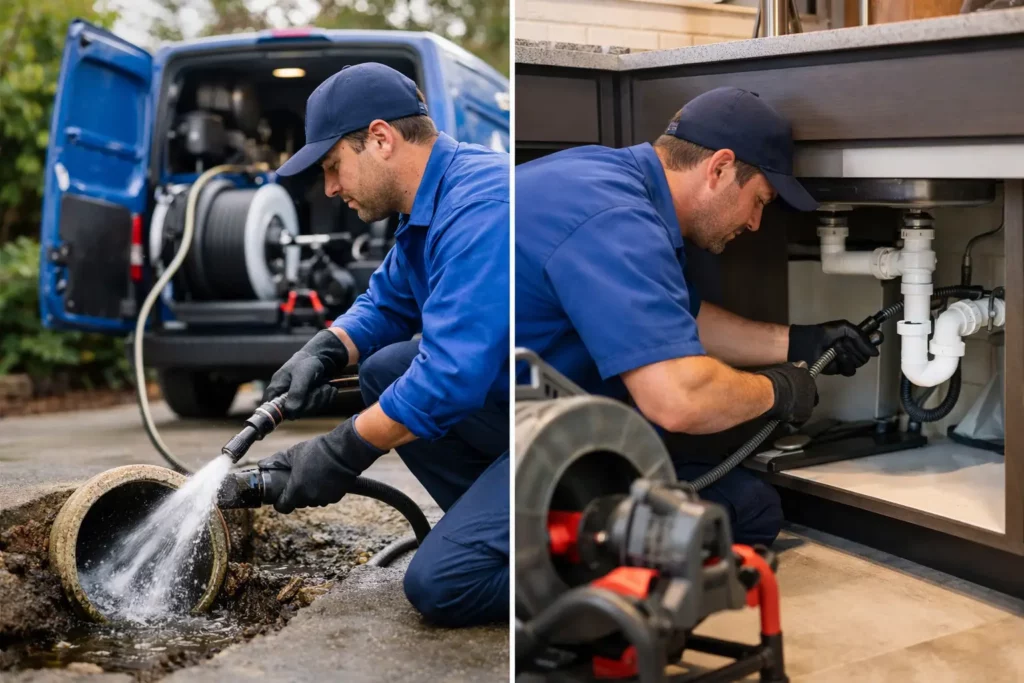
A drain that backs up once can be a simple blockage. A drain that slows down again a few weeks later usually needs a closer look. When customers ask about hydro jetting versus snaking, they are often trying to decide whether they need a quick way to restore flow or a more thorough cleaning of the pipe itself. Both methods are useful, but they do different jobs.
For homeowners and businesses in Chilliwack, the right choice depends on what is in the line, where the blockage is located, the condition of the piping, and whether the problem keeps coming back. A professional drain cleaning assessment helps avoid spending money on a temporary fix when the line needs more complete service.
Hydro Jetting Versus Snaking: The Main Difference
Drain snaking uses a flexible cable with a cutting head, retrieval tool, or other attachment. The cable travels through the drain and works its way into the obstruction. Depending on the tool used, it can break apart a clog, cut through roots, or pull out material such as hair and debris. Snaking is often the practical first response for a localized blockage.
Hydro jetting uses controlled high-pressure water sent through a specialized hose and nozzle. The nozzle cleans as it moves through the pipe, flushing buildup from the pipe walls and carrying loosened debris downstream. It is particularly effective when the issue is not one solid blockage but a coating of grease, soap residue, sludge, scale, or recurring root intrusion.
Put simply, a snake opens a path through or into a blockage. Hydro jetting cleans a larger portion of the inside of the pipe. That distinction matters when deciding what will provide a lasting result.
When Snaking Is the Better Choice
Snaking is often the right service when a drain has a defined, reachable obstruction and the rest of the line appears to be draining properly. A bathroom sink blocked by hair and soap buildup, for example, may only need the trap cleaned or the branch drain cabled. A toilet that will not clear because an object is caught near the fixture may also call for a targeted cable or retrieval tool rather than hydro jetting.
It can also be the more appropriate starting point during an urgent plumbing call. If a single fixture is overflowing or a commercial restroom has one blocked toilet, the priority is to restore safe use as quickly as possible. Once the immediate blockage is resolved, the plumber can determine whether further cleaning or inspection is needed.
Snaking has limits. A cable can punch through grease or sludge without removing the buildup left on the pipe walls. Water may start flowing again, but the opening can be narrow enough that the same line clogs again soon after. This is common in kitchen drains where cooking residue has collected over time, and in older drains with rough interior surfaces that catch debris.
When Hydro Jetting Makes More Sense
Hydro jetting is generally the better option for repeat drain problems, especially when several fixtures are affected or a main sewer line is slowing down. If the kitchen sink backs up regularly, the laundry drain gurgles, or water rises in a tub when another fixture is used, the issue may be farther along in the drainage system than a simple fixture clog.
For restaurants, food-service areas, and other light commercial properties, drain lines can collect heavy grease and organic buildup even with careful day-to-day use. A cable may restore flow temporarily, while hydro jetting can remove the material lining the pipe and help extend the time between service calls. The goal is not just to make the drain open today. It is to reduce the conditions that cause another backup.
Hydro jetting is also useful after root intrusion has been identified in a sewer line. Roots can enter through joints, cracks, or deteriorated sections of pipe and trap paper and waste. A cable may cut an opening through the roots, while hydro jetting can clear loose root material and accumulated debris from the line. If roots return quickly, however, cleaning alone will not repair the damaged pipe. That is when a sewer line repair assessment is needed.
Pipe Condition Comes First
More pressure is not automatically better. Before hydro jetting, a plumber needs to consider the age, material, and known condition of the drain or sewer line. A line with significant cracking, separated joints, severe corrosion, or a partial collapse may not be a suitable candidate for aggressive cleaning.
This is especially relevant in older homes, rental properties with limited maintenance history, and buildings where repeated backups have already occurred. A drain camera inspection can help identify root intrusion, damaged pipe, bellies in the line, or heavy buildup before selecting a cleaning method. It also gives the property owner a clearer explanation of why the blockage happened and what should be addressed next.
Proper hydro jetting is not simply putting a high-pressure hose into any pipe. The hose, nozzle, water pressure, and technique need to match the pipe size and the type of material being removed. Used correctly, it is an effective professional cleaning method. Used without understanding the line, it can create avoidable problems or fail to address a pipe that actually needs repair.
What the Symptoms Can Tell You
The location and pattern of a clog provide useful clues. One slow bathroom sink generally points to a local issue near that fixture. A single toilet that will not flush may be blocked in the toilet trap or nearby branch line. These are often snaking situations.
When multiple drains on the same level are slow, gurgling, or backing up, the problem may be in a shared branch or the main sewer line. If flushing a toilet causes a nearby tub or shower to fill, treat it as a drainage issue that needs prompt professional attention. Continued use can turn a manageable backup into water damage and an emergency plumbing repair.
Recurring kitchen clogs are another warning sign. Pouring hot water or using store-bought drain chemicals may appear to help, but these do not remove a significant grease layer or correct a developing blockage farther down the line. Chemical products can also be hard on certain piping and create a safety concern for anyone who later has to open the drain. Professional cleaning is the safer choice when a clog returns.
Cost Is About the Scope of the Problem
Snaking is commonly less involved than hydro jetting because it is aimed at a specific blockage. Hydro jetting usually requires more setup, specialized equipment, and a decision about whether the pipe can safely be cleaned. That can make it the larger upfront service.
However, the least expensive visit is not always the best value. If a kitchen or sewer line needs to be snaked every few months, repeated short-term clearing may cost more and create more disruption than a proper cleaning and inspection. On the other hand, hydro jetting a simple hair clog would be unnecessary. The best recommendation is based on diagnosis, not on selling the biggest service.
For landlords and property managers, documenting the location and likely cause of repeat backups is particularly useful. It helps distinguish between a one-time tenant-related clog, a maintenance issue in a shared line, and a drainage defect that may require repair. For business owners, it helps plan work around operating hours and avoid a preventable closure caused by a sewage backup.
How to Choose the Right Drain-Cleaning Service
Start by describing the symptoms clearly: which fixtures are affected, when the issue started, whether it has happened before, and whether there are odors, gurgling sounds, or water coming up in another drain. Those details help a plumber arrive prepared and choose the right diagnostic approach.
A good service call should not stop at “the drain is open.” Ask what was found, whether the blockage was local or in the main line, and whether there is evidence of buildup, roots, or pipe damage. If the line has a history of trouble, an inspection after cleaning may be worthwhile.
Armacom Plumbing & Heating helps Chilliwack homeowners, property managers, and local businesses choose practical drain-cleaning solutions based on the actual condition of the line. If a drain is repeatedly backing up, acting early gives you more options than waiting for the next overflow.