
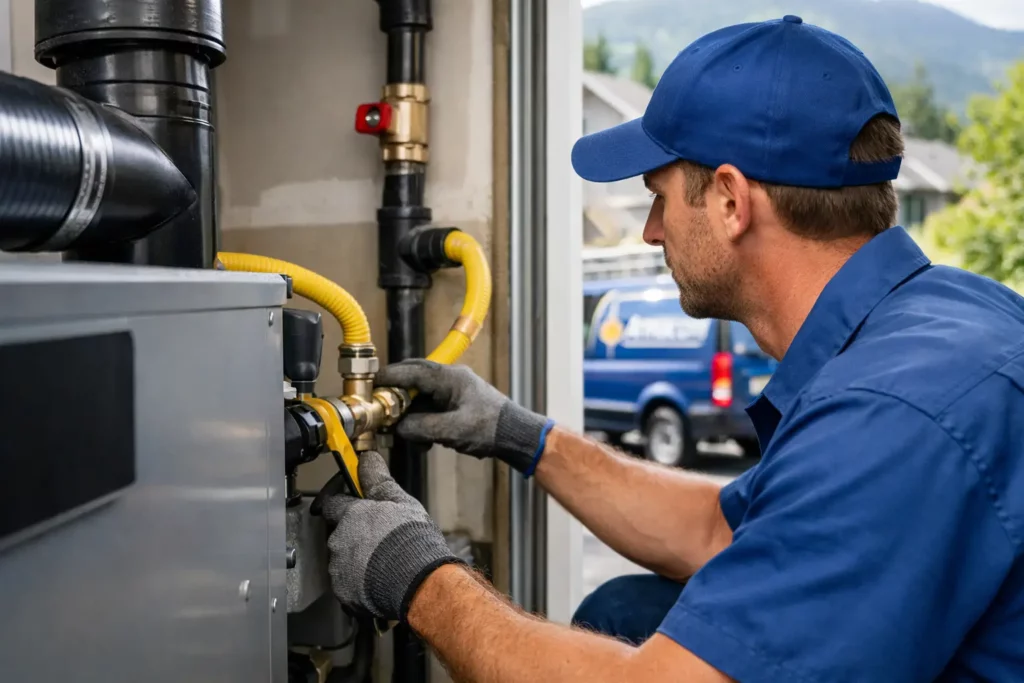
A homeowner in Chilliwack may call a plumber to replace a water heater, move a range, or connect a new gas fireplace and ask, “can a plumber install gas?” The practical answer is: sometimes, but only when that plumber is also properly certified and working under a licensed gas contractor. Plumbing and gas fitting are related trades, but they are not the same authorization.
That distinction matters because a gas line is not something to treat as a simple hookup. An incorrect connection, undersized pipe, missed leak, or appliance installed without proper testing can create a serious safety issue. It can also lead to failed inspections, delayed renovations, insurance concerns, and expensive corrections later.
Can a Plumber Install Gas in British Columbia?
A plumber can install, alter, repair, or connect gas piping only if they hold the appropriate gas fitting qualifications and work through a properly licensed gas contractor. A plumbing ticket by itself does not automatically authorize gas work.
In British Columbia, gas work is regulated through Technical Safety BC. The work may require a permit, inspection, pressure test, and documentation depending on what is being installed or changed. The person doing the work must understand the applicable gas code, local requirements, pipe sizing, combustion air, venting clearances, appliance specifications, and testing procedures.
Many experienced plumbing companies employ technicians who are qualified in both plumbing and gas fitting. That can be useful when a project involves water and gas together, such as a gas water heater replacement, a tankless water heater installation, or a boiler repair. Still, homeowners should ask a direct question before booking: “Will the person doing this work be certified for gas fitting, and will the required permit be handled?”
When You Need a Licensed Gas Fitter
Any work that changes the gas system should be handled by a qualified gas fitter. This includes extending an existing line, adding a new appliance connection, replacing damaged gas piping, relocating a meter-side line where permitted, or converting an appliance connection.
A common Chilliwack example is replacing a conventional gas water heater with a tankless model. The new unit may need a larger gas supply line because tankless equipment can have a much higher input demand than the old tank-style heater. It may also require changes to venting and condensate drainage. Simply connecting the existing gas line because it is already nearby is not a proper assessment.
The same applies when a restaurant adds cooking equipment or a commercial tenant changes the use of a space. A line that adequately served one appliance may not have enough capacity for the new total gas load. Gas pipe sizing is based on the input ratings of connected appliances, the length of the run, the pipe material, and the delivery pressure. Guessing can leave equipment starved for fuel or create operation and safety problems.
What a Proper Gas Installation Involves
Good gas fitting is more than threading pipe or connecting flexible appliance tubing. Before starting, a qualified technician reviews the appliance rating plate, confirms the type of fuel, calculates the gas demand, and checks whether the existing piping can carry the required load.
The installation also needs the correct shutoff valve, approved connectors where applicable, properly supported piping, protection where pipe passes through framing, and access for future servicing. Appliances must be installed to manufacturer instructions, not just to what appears to fit in the room.
After the piping work is complete, the system must be tested for leaks using an approved method. A gas fitter does not rely on smell alone or assume a joint is sound because it looks clean. If the project requires a permit, the permit and inspection process should be completed before the installation is considered finished.
This level of care is especially important in older Fraser Valley homes. We regularly see additions, converted garages, older appliance connections, and past renovations where gas lines were extended without clear labeling, adequate supports, or a proper shutoff arrangement. An inspection before adding another appliance can prevent a small project from becoming a larger correction later.
Plumbing Work and Gas Work Often Overlap
It is easy to see why homeowners assume every plumber installs gas. A water heater, boiler, and some laundry or kitchen upgrades involve both plumbing connections and gas connections. One contractor with qualified plumbing and gas-fitting personnel can coordinate the work efficiently and reduce handoffs between trades.
For example, replacing a failed gas water heater involves disconnecting and reconnecting the water piping, temperature and pressure relief discharge piping, drainage components, venting, and gas supply. If the existing water connections are corroded, the shutoff valve is unreliable, or the drain pan is missing where one is needed, those issues should be addressed at the same time. A fast replacement should still produce a safe, serviceable installation with long-lasting results.
At Armacom Plumbing & Heating, that means looking at the full installation rather than treating the gas connection as an afterthought. It also means being honest when a repair is possible and when aging equipment, unsafe piping, or repeated failures make replacement the more sensible choice.
Questions to Ask Before Hiring Someone
Before approving gas work at your Chilliwack home or business, ask who will perform the installation and what certification they hold. Ask whether a permit is required and who is responsible for arranging it. You should also ask whether the gas line will be sized for the appliance and whether the completed work will be pressure-tested.
For appliance replacements, confirm that the quote includes the full scope of work. A low price may cover only disconnecting the old unit and setting the new one in place, while leaving necessary upgrades out of the estimate. Depending on the job, those upgrades can include gas piping changes, shutoff valves, venting corrections, drainage work, or repairs to worn water piping.
Property managers and strata managers should also request clear records for any gas installation. Documented work helps when planning future maintenance, responding to a tenant concern, or selling the property. It is particularly useful in commercial spaces where equipment changes may happen more often.
Warning Signs That Need Prompt Attention
If you smell gas, hear a hissing sound near a gas line, or suspect an active leak, do not try to locate or repair it yourself. Leave the area if necessary, avoid using switches, open flames, or anything that could create a spark, and contact the gas utility or emergency services as appropriate. Once the immediate hazard is addressed, a licensed gas fitter can assess and repair the system.
Other signs are less urgent but still deserve a professional inspection. These include an appliance that repeatedly shuts down, yellow or irregular burner flames, visible corrosion on exposed gas piping, a shutoff valve that does not operate properly, or a water heater that is no longer reliably producing hot water. A failing water heater can involve water-side problems, gas-side problems, venting concerns, or several issues at once.
In Abbotsford, Chilliwack, and nearby communities, colder weather can expose equipment weaknesses quickly. Homeowners often notice the problem only when demand rises and an older appliance cannot keep up. Addressing the issue early gives you more options than waiting for a complete failure.
The Right Professional for the Job
A plumber who is qualified as a gas fitter can be the right person for many gas-related projects, particularly where water piping and gas appliances meet. But the credential and the process matter more than the title on the truck. Do not assume that every plumber is authorized to perform gas work, and do not accept an unpermitted shortcut on a system that affects your household or business safety.
Whether you are replacing a gas water heater, planning a tankless upgrade, adding an appliance, or dealing with suspected damaged piping, choose a contractor that can explain the scope clearly and complete the work with precision and care. A proper gas installation should leave you with equipment that operates safely, complies with requirements, and can be serviced confidently for years to come.