
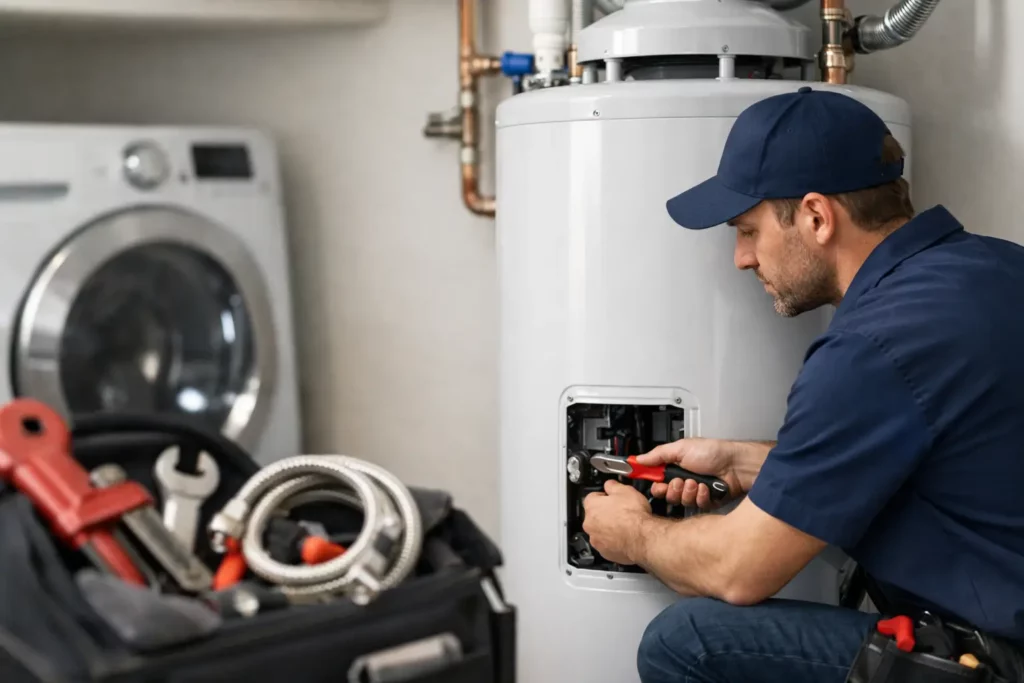
A water heater usually gives you some warning before it quits completely. Maybe the shower turns lukewarm halfway through. Maybe the tank starts making popping noises in the utility room. Maybe you notice a small puddle at the base and hope it is nothing. When people search for water heater repair Abbotsford, it is usually because the problem has stopped being easy to ignore.
In Abbotsford, water heater issues tend to show up at the worst times – early mornings, cold evenings, or right when you have a full house. That is why a good repair call is not just about getting hot water back for the day. It is about finding out what failed, what can be repaired safely, and whether the unit is still worth putting money into.
When water heater repair in Abbotsford makes sense
Not every water heater problem means the tank is finished. Some issues are straightforward. A failed thermostat, heating element, thermocouple, gas control problem, venting issue, or pressure relief valve can often be diagnosed and repaired without replacing the whole unit. If the tank itself is still sound and the unit is not too old, repair is often the practical choice.
That said, there is always a point where repair stops being good value. If a tank is leaking through the body, that is not a repair situation. If the unit is older, has a history of breakdowns, or shows signs of internal corrosion, it may be smarter to move ahead with a full water heater replacement instead of paying for one more temporary fix.
This is where experience matters. A proper assessment is not just, “Can I make it run again?” It is also, “Will this hold up, and is this the best use of your money?”
The most common water heater problems we see
No hot water at all
If you have no hot water, the cause depends on whether you have a gas or electric unit. On electric models, failed elements or thermostats are common. On gas units, the issue may be the pilot, thermocouple, igniter, gas valve, or venting. Sometimes the problem is inside the heater. Sometimes it is tied to the gas supply or electrical connection feeding it.
This kind of failure usually needs hands-on diagnosis. Guessing and swapping random parts wastes time and can create safety issues, especially on gas-fired equipment.
Not enough hot water
When the water starts hot and then runs out too quickly, there are a few likely causes. A lower heating element may have failed. Sediment may be taking up tank space. The thermostat may be set wrong or not reading correctly. In some homes, the real issue is that the current tank is undersized for the number of people using it.
That last part matters in Abbotsford homes that have changed over time. A house that once worked fine for two people may now have a basement suite, a larger family, or higher hot water demand than the original tank was meant to handle.
Water is too hot or inconsistent
Scalding water or major temperature swings usually point to a control problem. Thermostats can drift out of range. Gas control valves can malfunction. Mixing issues in the plumbing system can also affect what you feel at the fixture.
This is not something to brush off. Water that is too hot is a safety concern, especially in homes with children, seniors, or tenants.
Rumbling, banging, or popping noises
Tank water heaters often get noisier as sediment builds up inside. The burner or elements heat through that layer, causing overheating and trapped moisture to create popping or rumbling sounds. Some noise by itself is not an emergency, but it is a sign the unit is working harder than it should.
In a lot of cases, noise goes hand in hand with reduced efficiency and shorter equipment life. If the heater has been neglected for years, flushing alone may not solve it.
Leaks around the water heater
A leak does not always mean the tank has failed, but it needs attention right away. We see leaks from fittings, supply lines, drain valves, relief valves, and expansion-related issues. Those may be repairable. If the steel tank itself is leaking, replacement is the only real fix.
Water heater leaks are one of those problems that homeowners sometimes monitor for too long. Small leaks have a way of becoming flooring damage, drywall damage, or mold problems if they are left alone.
What a proper repair visit should include
A real service call should start with diagnosis, not assumptions. That means checking the heater type, age, visible condition, fuel or power supply, venting where applicable, shutoff operation, and signs of leakage or corrosion. If a part has failed, the next step is figuring out why it failed and whether anything else is putting stress on the system.
That matters because replacing one part does not always solve the larger issue. For example, if a pressure relief valve is discharging, the valve itself may not be the root cause. If an element burns out, sediment or overheating may be involved. If the pilot will not stay lit, combustion air or venting issues may be part of the problem.
A good plumber should be able to explain the repair in plain language, tell you what is urgent, and be honest if the heater is near the end of its life. That is the standard we aim for at Armacom Plumbing & Heating.
Repair or replace? It depends on three things
Age of the unit
Most conventional tank water heaters do not last forever. Once a unit gets into the older range, even a successful repair may only buy limited time. If the heater is still relatively young and otherwise in solid condition, repair is easier to justify.
Cost of the repair
If the repair is modest and the heater is sound, it usually makes sense to fix it. If multiple parts are failing or the quote starts getting close to the cost of replacement, that math changes quickly.
Condition of the tank itself
This is the deciding factor more often than anything else. A healthy tank with a bad component is a repair candidate. A corroded or leaking tank is not. Once the body of the water heater is compromised, replacement is the safe and practical route.
If replacement is the better option, homeowners often compare standard tank systems with a tankless water heater installation based on layout, demand, and budget. Some homes are a good fit for tankless. Others are better served by a properly sized storage tank. It depends on the property and how hot water is used day to day.
Abbotsford homes are not all the same
This is one reason cookie-cutter advice falls short. A newer home with a modern mechanical room has different service considerations than an older property with tight access, aging shutoffs, or original plumbing. We also see rental properties and multi-tenant setups where hot water demand is heavier and downtime creates more disruption.
For property managers and business owners, water heater issues can also overlap with broader plumbing concerns. A restaurant, retail unit, office, or tenant improvement project may need commercial plumbing service that looks beyond the tank itself. In some buildings, recurring hot water complaints are tied to maintenance gaps, fixture problems, or aging distribution piping rather than a single failed component.
A few signs you should not wait on
If you smell gas near the unit, see active leaking, notice scorching, hear unusual loud noises, or have no hot water with a commercial operation or occupied rental, it is worth treating as urgent. The same goes for a relief valve that keeps discharging or any sign of venting trouble on a gas water heater.
In those cases, fast diagnosis matters more than home remedies. Water heaters involve gas, electricity, pressure, and heat. There is not much room for trial and error.
How to get more life out of your next water heater
Some failures are sudden, but many are the result of years without maintenance. Periodic inspection, checking for leaks early, testing safety components, and dealing with sediment before it gets excessive all help. If your plumbing system has other known issues, such as older piping or pressure problems, those should be addressed too because they can affect water heater performance and lifespan.
For homeowners planning ahead, routine plumbing maintenance is usually cheaper than emergency replacement during a failure. It also gives you time to make a smart decision instead of a rushed one.
If your hot water has become unreliable, the best next step is simple: have the unit assessed properly and get a straight answer on repair versus replacement. You can learn more about service options at https://armacom.ca, including support for water heater replacement, tankless water heater installation, and emergency plumbing repairs. A good repair should solve the actual problem, not just buy a few quiet days before the next breakdown.