
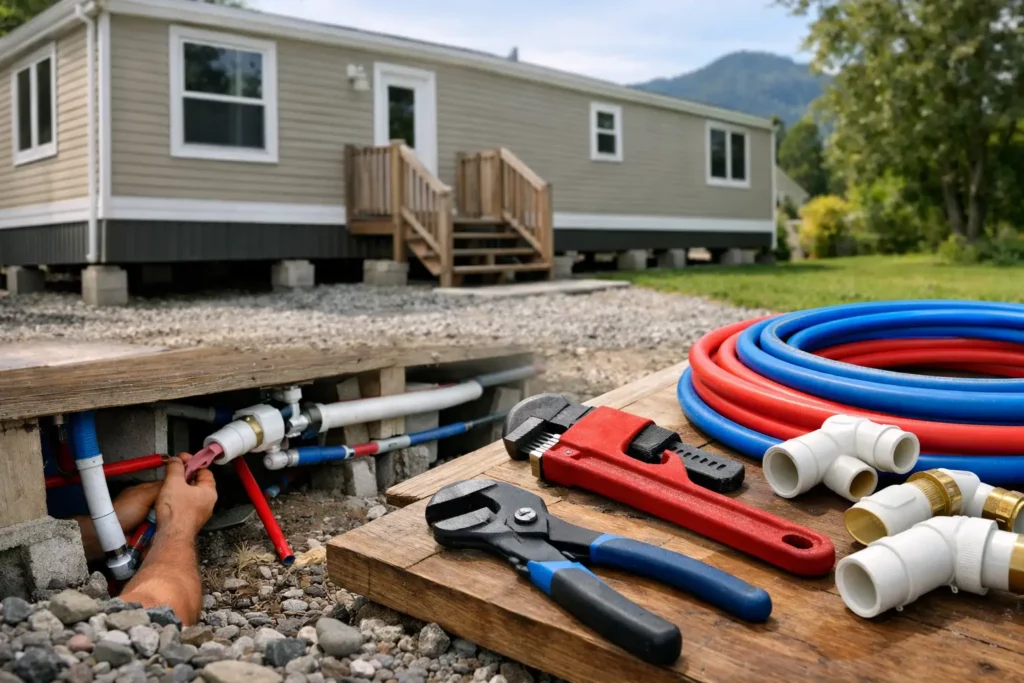
A lot of mobile home plumbing problems start quietly. A pinhole leak under the floor, weak hot water pressure at the bathroom sink, or discolored water after the pipes have been sitting overnight may not seem urgent at first. But when you own an older manufactured home, those signs often point to a bigger issue. If you are looking into mobile home repiping Chilliwack homeowners often ask the same question first – repair the bad section, or replace the system and be done with it?
The honest answer is that it depends on the age of the piping, the material used, how often you have had leaks, and how accessible the lines are. In many mobile homes, partial repairs make sense for a while. After a certain point, though, repiping becomes the more practical and less expensive path over time.
Why mobile homes are different to repipe
Repiping a mobile home is not exactly the same as repiping a site-built house. The layout is tighter, access is more limited, and a lot of the plumbing runs beneath the home rather than through open framing inside walls. That changes how the work is planned and where time is spent.
In older units, we often find a mix of materials from past repairs. You might have original polybutylene in one section, copper added later, and newer PEX patched into a few problem spots. That patchwork can work for a while, but it also creates more fittings, more connection points, and more places for problems to start.
Mobile homes also tend to show plumbing wear faster when freezing weather, movement, or deferred maintenance have taken a toll. In places like Hope or Agassiz, where winter cold snaps can expose weak points fast, older underfloor water lines are especially vulnerable if insulation or heat tape has been inconsistent.
When repair stops making sense
One leak does not automatically mean you need a full repipe. But repeated leaks usually mean the system is telling you something. If you have repaired several sections over the last year or two, or if the leaks are happening in different areas, there is a good chance the piping has reached the end of its useful life.
Low pressure is another clue, especially when it affects multiple fixtures. That can come from buildup, internal pipe wear, failing valves, or undersized replacement sections added over time. If your hot water side is worse than the cold, that points even more strongly to aging pipe or restriction.
Water quality changes matter too. Brown tint, metallic taste, or debris at aerators may not always mean a repipe is required, but they should be inspected. In a mobile home, a hidden leak or deteriorating water line can do more damage than people expect because moisture under the structure often goes unnoticed until flooring softens or insulation is soaked.
The pipe material matters
A lot of repiping decisions come down to what is already installed. Polybutylene is one of the most common reasons homeowners call for a full replacement. It was used widely for a period and has a long track record of failures. If your mobile home still has Poly-B, replacing isolated sections may only delay the next leak.
PEX is usually the preferred replacement for mobile home repipes because it handles routing well in tight spaces, uses fewer fittings than rigid pipe, and performs well when installed properly. It is not magic, and poor workmanship still causes problems, but it is a strong fit for this type of home.
Copper can still be the right choice in some situations, but in a mobile home it is often less practical because of access, movement, and installation complexity. The right answer depends on the home, the exposure conditions, and the overall system design. If you are already dealing with aging Poly-B, this is usually a good time to look at full Poly-B replacement rather than continuing to patch one leak at a time.
How a mobile home repipe is usually planned
The first step is not tearing into walls. It is figuring out the route, access points, fixture connections, shutoffs, and any existing damage that has to be addressed first. In a mobile home, a good plan saves a lot of wasted labor and prevents unnecessary disruption.
That inspection should include the water service entry, the water heater connections, the bathroom group, kitchen lines, laundry, and any visible piping underneath the unit. If there are signs of active leaks, those need to be stabilized first. In some cases, leak repair has to happen before the repipe can even be scheduled safely.
From there, the work is usually organized to limit downtime. Homeowners want to know how long the water will be off, whether fixtures can stay in place, and if floors or wall panels need to be opened. Those are fair questions, and the answers vary with the home.
A straightforward repipe can often be done with minimal interior disturbance if access below the home is good. If belly wrap, insulation, or previous repairs have made access difficult, the job gets more involved. That is one reason quotes can vary a lot from one property to another, even when the homes look similar from the outside.
What Chilliwack-area homeowners should expect
With mobile home repiping Chilliwack properties often share one challenge that does not show up clearly in a listing or walkthrough – moisture and age under the home. Older parks and rural properties can have years of wear hidden below the floor system. A proper repipe quote should account for that reality instead of assuming everything underneath is clean, dry, and easy to reach.
That same issue comes up in Mission and Abbotsford, especially where older manufactured homes have had additions, skirting changes, or multiple rounds of handyman plumbing over the years. If a contractor gives a price without looking carefully at access and pipe condition, expect change orders later.
Weather also plays a role. Freeze exposure can damage more than the pipe itself. It can affect supports, insulation, fittings, and shutoff valves. If the home has had freeze-ups before, that should be part of the repiping conversation because replacing pipe without addressing the cause is only half a fix.
Cost, disruption, and the trade-offs
Most homeowners hesitate at the same point – the upfront cost. That is understandable. Full repiping costs more than a spot repair, and in some mobile homes it may not make sense if the unit is near the end of its service life or scheduled for major renovation.
But there is a point where repeated emergency calls, water damage, and lost time cost more than doing the work properly. If you are managing a rental unit or multiple properties, the math gets even clearer. Planned replacement is almost always easier on tenants and budgets than another surprise leak on a weekend.
Disruption is usually less than people expect when the work is organized well. Water may be off for parts of the day, and there may be some access openings, but a clean repipe is generally more manageable than ongoing repairs in random locations over the next few years.
Choosing the right plumber for a mobile home repipe
This is not the kind of job where the lowest bid is automatically the best value. Mobile homes have enough quirks that experience matters. You want a contractor who understands access challenges, underfloor routing, shutoff placement, fixture reconnections, and what to do when the original installation was less than ideal.
Ask how the new system will be routed, what pipe material is recommended, whether shutoffs will be updated, and how damaged insulation or belly material will be handled if it has to be opened. Good answers are usually practical, not flashy.
If your plumbing issues are tied into other concerns like an aging water heater or chronic leak history, it also helps to work with a company that handles broader residential plumbing service rather than treating the repipe as an isolated task. For homeowners who want one point of contact for inspection, repair, and replacement work, Armacom Plumbing & Heating approaches these projects with that full-system view. You can also learn more about our work at https://armacom.ca.
A mobile home repipe is not just about new pipe. It is about getting reliable water service back, reducing the chance of hidden leaks, and making the home easier to maintain going forward. If your plumbing has become a cycle of one repair after another, it may be time to stop patching and start planning for a long-term fix.