
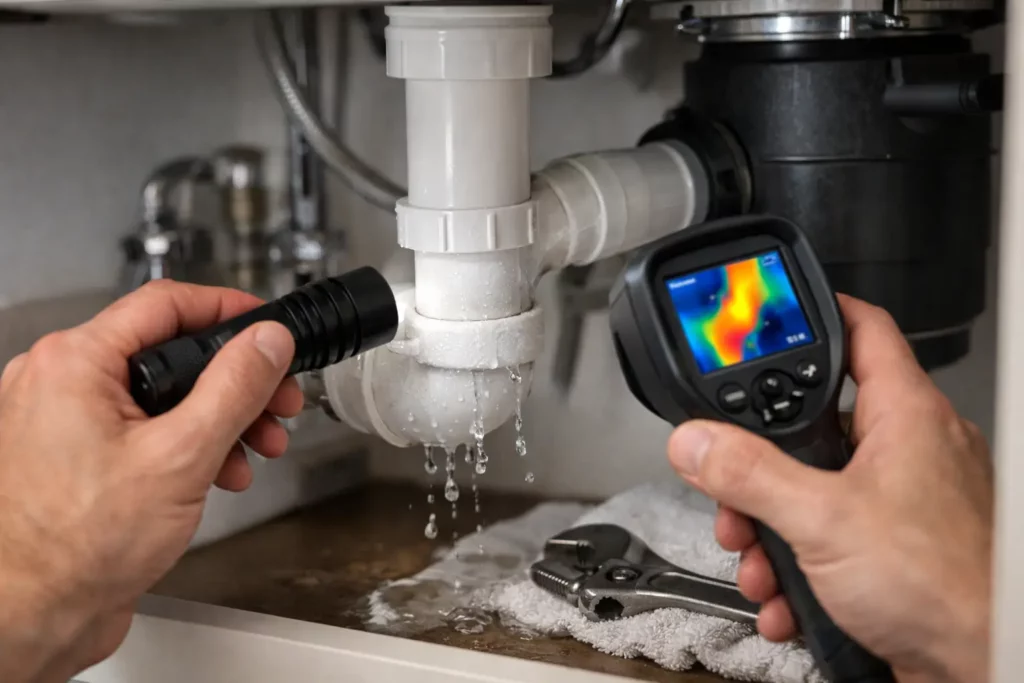
A higher water bill usually gets your attention first. Then you notice a damp cabinet floor, a faint musty smell, or a patch on the wall that was not there last week. If you are wondering how to find plumbing leaks before they turn into structural damage, mold, or a costly repair, the key is to act early and check the right places in the right order.
Some leaks are obvious. A dripping supply line under a sink is hard to miss. Others stay hidden behind drywall, under slab floors, or inside ceilings while quietly damaging framing, insulation, and finishes. A careful inspection can often narrow down the source, but there is also a point where professional leak detection saves time, prevents guesswork, and limits damage.
How to find plumbing leaks without tearing into walls
The best starting point is to pay attention to changes in your home. Plumbing leaks often announce themselves indirectly. Water stains, peeling paint, warped baseboards, soft flooring, and recurring mildew are all clues. So are sounds – hissing, dripping, or water running when every fixture is turned off.
Start by checking the fixtures and areas you use every day. Look under kitchen and bathroom sinks, around toilets, behind washing machines, near water heaters, and at exposed shutoff valves. Run your hand along supply lines and drain connections. A slow leak can leave only a fine film of moisture or mineral buildup before you ever see a drip.
Next, look at surfaces around the plumbing, not just the pipes themselves. If the pipe is hidden, the surrounding material often tells the story first. Drywall may bubble. Flooring may feel slightly soft or warmer or cooler than the surrounding area. Cabinets may swell along the bottom edge. These signs do not always tell you exactly where the leak starts, but they help you narrow the search.
If you suspect a leak and cannot find it visually, the water meter is one of the most useful tools you have.
Use your water meter to confirm a hidden leak
Turn off every water-using fixture and appliance in the property. That includes faucets, irrigation, dishwashers, ice makers, and laundry equipment. Once everything is off, check the water meter. If the leak indicator is moving or the reading changes after 15 to 30 minutes with no water being used, water is going somewhere.
This test is simple, but it has limits. It confirms that a leak may be present, not exactly where it is. It also will not tell you whether the issue is on a supply line, a fixture, or a running toilet unless you isolate parts of the system one by one.
A practical next step is to shut off individual fixtures or branch lines where possible and repeat the test. If the meter stops moving after isolating one section, you have likely narrowed the leak to that area.
Check toilets before you assume the worst
Toilets are one of the most common sources of ongoing water loss, and many homeowners overlook them because there is no puddle on the floor. A worn flapper or faulty fill valve can allow water to keep moving from the tank into the bowl all day.
A simple dye test works well here. Add a few drops of food coloring to the toilet tank and wait 10 to 15 minutes without flushing. If color shows up in the bowl, the toilet is leaking internally. That kind of leak may not damage your floors right away, but it can waste a surprising amount of water and inflate utility bills.
Also check around the toilet base. If the floor feels loose, stained, or damp, the wax seal may be failing. That is a different problem from a running toilet and can lead to damage below the finished floor.
Where plumbing leaks usually hide
Some areas deserve extra attention because leaks there are common and often stay unnoticed longer than they should.
Under sinks, the usual trouble spots are supply tube connections, drain traps, and faucet mounting points. Leaks here may appear only when the faucet is running, so inspect while water is on and again after shutting it off.
Behind washing machines, look closely at hose connections and the hoses themselves. Small cracks and bulges can become major failures without much warning. Around water heaters, inspect the shutoff valve, temperature and pressure relief discharge piping, and the base of the tank. Moisture at the bottom can mean anything from a loose connection to a tank failure.
Ceilings below bathrooms are another common clue zone. If you see discoloration or sagging drywall below a tub, shower, or toilet, the leak may be upstairs even if the stain appears farther away. Water travels. It often follows framing or pipe runs before showing itself.
Showers can be especially deceptive. If the leak appears only after someone bathes, the problem may be in grout lines, caulking, the drain assembly, or the valve behind the wall. If it appears all the time, a pressurized supply line is more likely.
Slab and underground leaks need a different approach
If your home has plumbing in or under a concrete slab, leak detection gets more complicated. You may notice warm spots on the floor, unexplained moisture, a sudden drop in water pressure, or water sounds with no visible source. In some cases, flooring begins to lift or crack because moisture is moving up from below.
This is where guesswork gets expensive. Breaking concrete in the wrong place adds cost and disruption without solving the problem. Professional plumbers use leak detection methods that help locate the source more accurately before repairs begin.
Signs the leak is in the drain system, not the water line
Not every plumbing leak is under constant pressure. Drain leaks behave differently from supply leaks, and that difference matters when you are trying to track them down.
A supply leak usually leaks all the time or whenever the line is pressurized. A drain leak often appears only when a sink, shower, tub, or appliance is being used. If the cabinet under your sink stays dry until the basin drains, look at the trap, drain tailpiece, or basket connections. If the ceiling below a bathroom gets wet only after showering, the issue may be the drain, overflow, or shower pan area.
Odors can also help you distinguish the problem. Drain leaks may bring sewer gas smells along with moisture, while clean water line leaks usually do not.
When to stop looking and call a plumber
There is value in early inspection, but not every leak should become a DIY project. If water is entering walls, ceilings, or floors and the source is unclear, fast diagnosis matters more than trial and error. The same is true if you suspect a slab leak, a pipe leak behind finished surfaces, or a leak near electrical systems.
You should also call for help if you have already confirmed a leak with the meter test but cannot isolate the source. At that point, every hour of delay can mean more damage to drywall, insulation, trim, and subfloor.
A professional plumber can pressure test lines, inspect fixtures more thoroughly, and identify hidden failures without unnecessary demolition. For homeowners and property managers, that usually means a cleaner repair path and lower overall cost.
How to reduce the chance of future leaks
Once you find one leak, it is worth taking a wider look at the system. Plumbing issues often cluster around aging fixtures, worn supply lines, high water pressure, and neglected maintenance.
Replace old rubber washing machine hoses before they fail. Pay attention to minor drips instead of waiting until they become active leaks. If a shutoff valve is corroded or difficult to operate, deal with it before an emergency forces the issue. Water heaters, toilets, and under-sink connections all benefit from occasional inspection.
It also helps to know where your main shutoff is and make sure everyone responsible for the property knows how to use it. In a real leak event, that few seconds of action can make a major difference.
For homes and commercial spaces alike, the best results come from a mix of awareness and prompt repair. You do not need to become a leak detection expert, but you do need to recognize when a damp spot is more than a cosmetic issue. Catch it early, test methodically, and if the signs point to a hidden problem, bring in a plumber who can find it properly and fix it cleanly. That is usually the fastest route back to a dry, reliable system.