
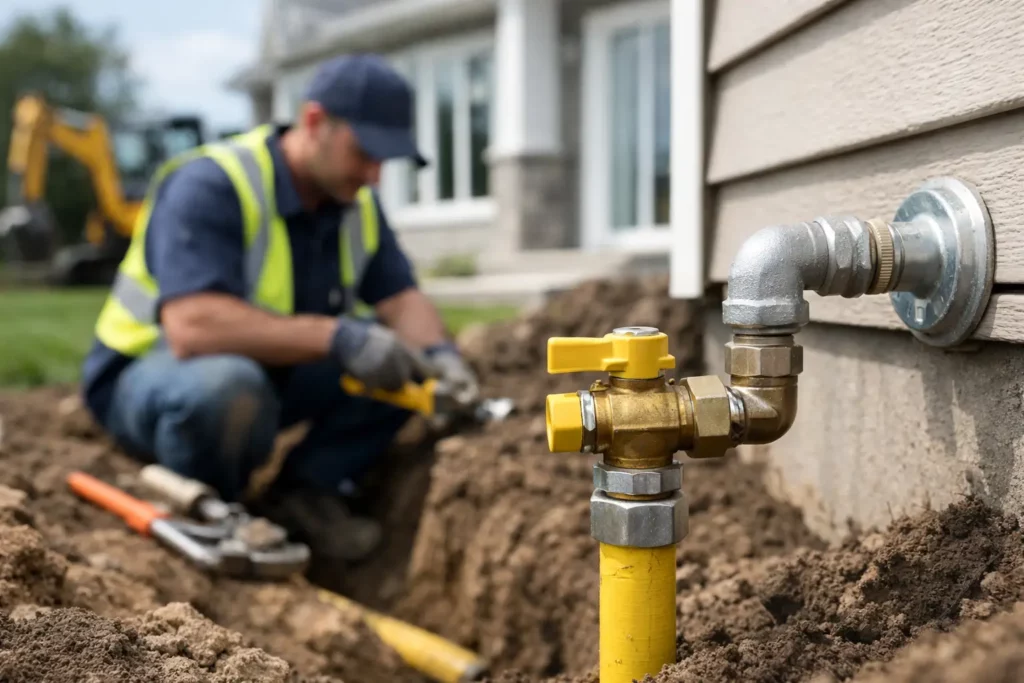
That new range, pool heater, standby generator, or commercial appliance does not run on guesswork. A proper gas line installation guide starts with one fact: gas work has very little margin for error. The line has to be sized correctly, routed properly, pressure tested, and inspected to code. If any part of that chain is rushed, you can end up with poor appliance performance, failed inspections, leaks, or a costly redo.
For homeowners and property managers, the goal is not to memorize every fitting and fuel code requirement. The goal is to understand what a correct installation should include, where problems usually happen, and when licensed gas fitting is the safer and more cost-effective path. That matters whether you are adding a single barbecue connection or planning gas service for a renovation or new build.
What a gas line installation guide should actually cover
Many articles make gas piping sound simple – measure the distance, pick a pipe, connect the appliance. In real projects, it is more involved than that. The right installation depends on the type of gas, the total demand of all connected appliances, pipe length, fitting losses, shutoff placement, ventilation requirements, and local permit rules.
A residential kitchen upgrade, for example, may look straightforward if you are swapping an electric range for gas. But if the existing line was only sized for a water heater and furnace, adding another appliance can reduce available pressure. The result may not be dramatic at first. Instead, you get nuisance issues: slow burner response, incomplete combustion, pilot problems, or poor equipment efficiency.
Commercial spaces raise the stakes further. A small restaurant, office unit, or mixed-use property may need longer runs, larger inputs, and more coordination with mechanical trades. In those cases, clean planning is what keeps the project on schedule.
Start with load, not pipe
The most common mistake in gas work is starting with materials before confirming demand. Every appliance has a required input rating, and the gas system has to deliver enough volume at the right pressure. That includes the appliances already connected and any future equipment the owner intends to add.
This is why licensed installers begin with the appliance list. Furnaces, water heaters, fireplaces, dryers, cooktops, generators, garage heaters, and pool equipment all count toward the total load. Once that demand is known, the line can be sized based on run length, allowable pressure drop, and code tables.
Bigger is not always better, but undersized lines create problems fast. Oversizing can also be inefficient or impractical depending on the layout and material choice. Good workmanship means choosing a line that fits the actual system, not just the appliance being added today.
Gas line installation guide for planning the route
Routing matters more than many property owners expect. A gas line needs to reach the appliance safely while staying accessible for service, protected from physical damage, and compliant with clearance requirements. The shortest route is not always the best route.
In finished homes, wall and ceiling access often shapes the plan. Installers may need to work through crawl spaces, mechanical rooms, garages, or exterior walls to avoid tearing into completed spaces. In commercial settings, the route may need to account for tenant improvements, fire separations, and coordination with other building systems.
Outdoor runs have their own considerations. Exposure, support spacing, protective sleeving, and the potential for corrosion all affect material choice and installation method. If the line serves a generator, fire table, pool heater, or outdoor kitchen, the location of valves and connection points matters just as much as the line itself.
A well-planned route also makes future service easier. If a shutoff is buried behind finishes or the piping is awkwardly installed above other utilities, simple maintenance becomes harder and more expensive later.
Choosing the right piping material
The material used for a gas line depends on the application, local code requirements, and site conditions. Black iron pipe remains common for many interior installations because it is durable and well suited to rigid gas piping systems. Corrugated stainless steel tubing can be useful in certain applications where flexibility and faster routing are advantages. Copper may be allowed in some areas and restricted in others depending on the gas supply and code standards.
There is no one-size-fits-all answer here. What works well in a mechanical room may not be the right choice for an exterior run or a retrofit through tight framing. Material selection should also account for support, joint integrity, protection against damage, and inspection requirements.
This is one of those areas where local experience helps. Installers who work regularly across homes, renovation sites, and small commercial projects tend to spot practical issues early, before material choices create delays.
Permits, code compliance, and inspections
A gas line installation guide that skips permits is not much of a guide. In most cases, new gas line work, extensions, or appliance additions require permits and inspection. That protects the property owner as much as it protects the building.
A permitted job creates a clear record of the work performed. That can matter during resale, insurance review, renovation planning, or warranty questions. It also means the installation has been checked against the applicable code requirements for sizing, shutoffs, supports, sediment traps where required, regulator setup, and testing.
Some owners hesitate at the permit process because they worry it will slow everything down. Sometimes it adds a step, but skipping it often causes bigger problems later. An unpermitted gas line can hold up a sale, fail a later inspection, or force parts of the work to be exposed again for review.
If the project is part of a larger renovation, coordination is important. Appliance specs, framing access, venting, electrical needs, and final fixture placement all affect the gas work. Getting the gas fitter involved early usually saves time.
Testing is not optional
Once a gas line is installed, it needs to be tested before it is put into service. That generally includes pressure testing the new piping and checking all joints and connections for leaks. Final startup may also involve verifying that appliance pressures and operation match manufacturer requirements.
This step is where careful work shows. A line that looks neat is not automatically a line that performs correctly. Testing confirms that the system is tight and that the appliance is receiving the fuel supply it needs.
If an installer treats testing as a formality, that is a concern. Proper testing is part of the job, not an add-on. The same goes for a clean final walkthrough. Property owners should know where shutoffs are located, what was installed, and what signs would justify a service call later.
When replacement makes more sense than extension
Not every project should be handled by simply tapping into an old line. In older homes or heavily modified buildings, the existing gas piping may be poorly routed, undersized, corroded, or pieced together from multiple past changes. In that case, extending the line can keep an old problem alive.
A partial repipe or system upgrade may be the better investment if you are adding higher-demand equipment or renovating multiple areas at once. The upfront cost is higher, but so is the long-term value. You get a cleaner layout, fewer hidden weak points, and a system better suited to current use.
That is especially relevant for property managers balancing maintenance budgets. A cheaper patch today can turn into repeat service calls, appliance issues, and tenant complaints later.
Signs the installation needs professional attention
Some problems appear before the work starts. If you are unsure whether your property has enough capacity for a new gas appliance, if the route requires opening finished walls, or if outdoor equipment is being added, that is already professional territory.
Other warning signs show up after changes have been made. Burners that do not perform consistently, gas odor, appliances that cycle poorly, visible corrosion, or shutoffs in awkward locations all deserve a proper inspection. So do lines that were installed years ago without clear records or permit documentation.
For homeowners, the practical rule is simple: gas work is not the place to test your luck. For builders and commercial clients, it is also not the place to create scheduling risk with shortcuts.
A dependable contractor brings more than code knowledge. They bring planning, clean execution, and the judgment to know when a simple extension is enough and when the system needs a broader upgrade. That is the difference between work that passes inspection and work that keeps performing season after season.
If you are planning a gas appliance addition, renovation, or equipment upgrade, treat the line as part of the system, not an afterthought. Good gas work stays quiet in the background, which is exactly how it should be.