
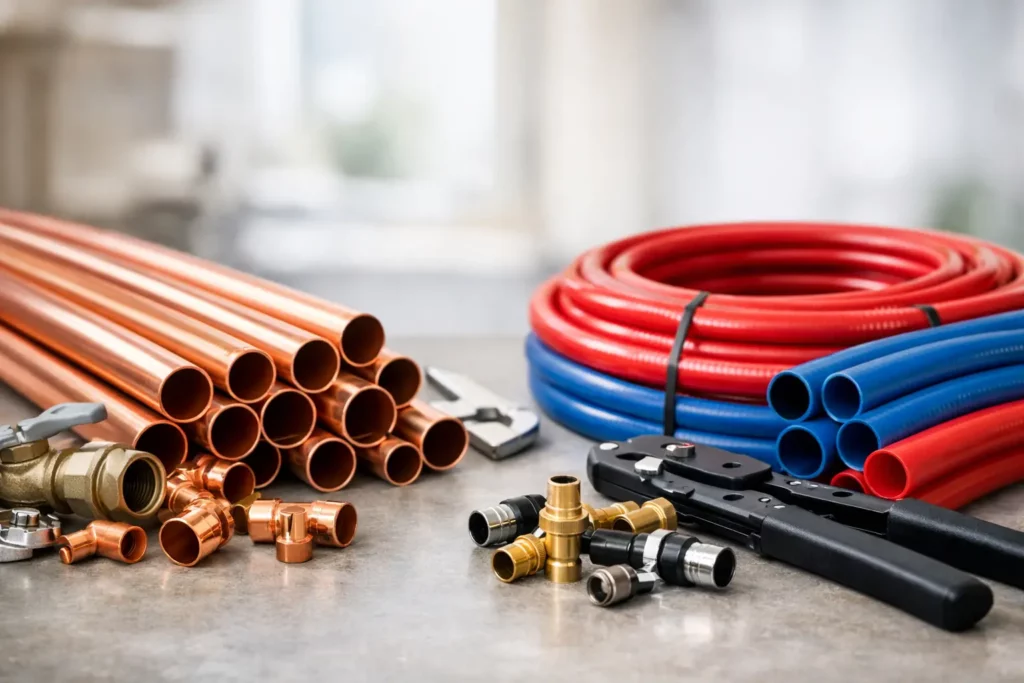
If you are replacing old water lines, planning a renovation, or building new, the copper vs PEX piping question usually shows up fast. And for good reason. The pipe you choose affects installation cost, long-term maintenance, water delivery, and how well your plumbing system handles the conditions inside your home.
There is no one-size-fits-all answer. Copper has a long track record and a reputation for durability. PEX is flexible, cost-effective, and faster to install in many situations. The better choice depends on your budget, your building, your water conditions, and whether you are solving a short-term problem or investing for the next few decades.
Copper vs PEX piping: the basic difference
Copper is a rigid metal pipe that has been used in residential and commercial plumbing for generations. It is typically joined with fittings and soldered connections, although press fittings are also common in professional work. Many property owners trust copper because it is familiar and proven.
PEX is a flexible plastic tubing designed for water supply lines. It bends around corners, requires fewer fittings in many layouts, and can usually be installed faster than copper. That flexibility is one of the main reasons it has become so common in repipes, remodels, and new construction.
At a glance, copper often wins on tradition and heat tolerance, while PEX usually wins on labor efficiency and material cost. But the real decision is more specific than that.
Cost is often the first deciding factor
For many homeowners and property managers, cost is where the conversation starts. In most cases, PEX is less expensive than copper, both in raw material and labor. The tubing itself usually costs less, and because it bends easily, installers can often run longer sections with fewer fittings and less wall disruption.
Copper tends to cost more because the material is more expensive and the installation is more labor-intensive. Cutting, fitting, and joining copper takes more time, especially in tight spaces or occupied homes where access is limited.
That does not automatically make PEX the better value. If you are already opening walls, upgrading a large section of plumbing, or working in a property where copper makes more sense for the application, the added cost may be justified. The right comparison is not just the bid amount. It is the total value over the life of the system.
Installation conditions matter more than most people expect
A lot of the copper vs PEX piping decision comes down to the house itself. In a remodel with finished walls and ceilings, PEX often allows for a cleaner, less invasive installation. Because it can snake through framing cavities, crews may not need to open as much drywall to complete the work.
That can make a big difference in lived-in homes, tenant-occupied units, and commercial spaces where downtime matters. Faster installation also reduces labor hours, which helps control the overall project cost.
Copper can still be the better fit in exposed areas where rigid pipe offers a cleaner finished look, or where specific code and mechanical requirements favor metal piping. In utility rooms and mechanical spaces, appearance and support layout may also influence the choice.
Durability depends on the environment
Both materials can last a long time when installed correctly, but they do not fail in the same way.
Copper is strong and well-established, but it can be affected by water chemistry over time. In some homes, aggressive water conditions can contribute to pinhole leaks or corrosion. If a property has had repeated copper leaks, replacing with the same material without addressing the cause may not solve the long-term problem.
PEX is resistant to corrosion and does not develop pinhole leaks the way copper can. It also handles freezing conditions better because it has some ability to expand. That does not make it freeze-proof, but it can be more forgiving than rigid pipe in cold-weather events.
On the other hand, PEX should not be exposed to prolonged UV light, so it is not something you want left sitting in the sun before installation or used carelessly in areas with direct exposure. It also needs to be protected from physical damage and installed with the correct supports, bends, and fittings.
How water quality affects the choice
Water quality is one of the most overlooked parts of this decision. If your home has hard water, highly acidic water, or a history of recurring pipe issues, that should factor into the recommendation.
Copper performs very well in many systems, but certain water conditions can shorten its life. PEX is generally less reactive to those conditions, which is one reason it is often considered during repipes where corrosion has already been a problem.
Some homeowners also ask about taste. In normal use, both systems can deliver clean water when installed properly. But if someone is sensitive to taste changes, especially right after a new installation, it is worth talking through expectations based on the property and the scope of work.
Copper vs PEX piping for hot and cold water lines
Both copper and PEX are used for hot and cold water distribution, but they behave differently. Copper handles high heat very well and has long been used around water heaters and mechanical equipment. PEX also works for hot water lines, but it must be the correct product and installed according to manufacturer and code requirements.
One practical difference is heat loss. PEX tends to retain heat better than copper because it does not transfer heat as quickly. In some systems, that can slightly improve efficiency and reduce the wait for warm water at fixtures, depending on the plumbing layout.
Copper is more rigid and can transmit more noise through the system. PEX is often quieter, especially in homes where water hammer or pipe movement has been an issue.
Repairs, renovations, and partial upgrades
Not every project is a full repipe. Sometimes a homeowner is dealing with a slab leak, a burst section, or an isolated remodel in a kitchen or bathroom. In those cases, the best material may depend on what is already in place and how much of the system is being touched.
A partial repair may call for matching the existing piping, or it may be smarter to transition to another material in the affected area. What matters is doing it cleanly, legally, and in a way that supports future service. A short-term patch that creates long-term complications is rarely the cheapest option.
This is where experienced planning matters. A contractor should look at access, pipe condition, water pressure, future renovation plans, and the age of the rest of the system before recommending one route over the other.
When copper makes more sense
Copper is often a strong choice when long-term durability in exposed mechanical areas is important, when a client prefers a traditional material, or when the existing system and building design support it well. Some owners also prefer copper for premium builds where material preference is part of the overall project standard.
It can also make sense in applications where heat resistance, rigidity, or a specific finished appearance matters more than labor savings.
When PEX makes more sense
PEX is often the practical choice for repipes, remodels, attic or crawlspace routing, and projects where speed and access are major concerns. It is especially useful when minimizing wall cuts and disruption is a priority.
For many residential systems, PEX offers an excellent balance of performance, affordability, and reliability. It has become common for a reason. When installed properly, it gives property owners a durable system without the higher cost that often comes with all-copper installation.
The right answer is based on the job, not the trend
Homeowners sometimes come in looking for a simple winner, but plumbing does not work that way. The best pipe for one house may be the wrong fit for another. A newer custom home, a rental property, an older house with recurring leaks, and a light commercial unit all bring different priorities.
The most useful question is not which material is better in general. It is which one makes the most sense for your budget, your building, and your long-term plans. That is how a good plumbing decision gets made.
At Armacom Plumbing, those recommendations are based on real installation conditions, not guesswork or sales language. If you are weighing copper and PEX, get the system looked at properly first. A clear plan now usually saves money and frustration later.
If you are choosing between the two, aim for the option that fits the whole property, not just the lowest price on paper. Good plumbing should work quietly in the background for years, and the best material is the one that helps make that happen.